banner
Home

Blog

Blog

  • What are the core criteria for evaluating an electric drive supplier in overseas vehicle projects?
    What are the core criteria for evaluating an electric drive supplier in overseas vehicle projects?
    Oct 13, 2026
    During my interactions with numerous vehicle manufacturers and purchasing personnel, I have deeply felt the considerations, pressure, and responsibilities behind each purchasing decision.   Core Considerations For Supplier Selection When overseas vehicle enterprises conduct the selection of electric drive suppliers, purchasing and technical engineers usually start by comparing the basic parameters and quotations of the prototypes. This is correct for the process, but when making the final selection and judgment, it is not just about these.   Evaluating whether a supplier can be a partner requires a comprehensive assessment of the production guarantee strength, overseas compliance reserves, functional safety design, and the full-cycle project delivery capability. Prototype performance can only represent the level of R&D, while the smooth implementation of the project depends more on the supplier's overall vehicle-grade implementation capability.   Stability Of Mass Production Delivery I believe the primary criterion for evaluating a supplier's strength is to see if the supplier can provide a mass production-ready electric powertrain.   Many enterprises on the market can produce impressive prototypes, but there are very few manufacturers that can adapt to overseas vehicle regulations and maintain the standardization of mass production. Prototype performance focuses on performance, while vehicle-grade mass production places more emphasis on batch consistency, production yield, and supply chain resilience.   IATF16949: Important support for the stability of mass production delivery through the automotive quality management system Through the automotive quality management system, it is a powerful proof that the supplier has the stability for product mass production. It runs through the entire process from incoming inspection to supply chain management, constraining a complete production process. It represents that the supplier has the ability to support the completion of long-term large-scale deliveries, effectively alleviating the purchasing party's concerns about quality fluctuations during the mass production stage.   The Entry Requirements For The Offshore Project Once a vehicle project embarks on its overseas journey, compliance becomes an inevitable and indispensable threshold. In Europe and many other overseas regions, strict safety standards and EMC (Electromagnetic Compatibility) requirements are imposed on vehicle-mounted high-voltage components. The CE certification serves as a crucial market entry document, directly affecting the product's customs clearance. If the product's compliance qualifications are not met, even if the hardware performance is outstanding, it will still face customs clearance obstacles and be unable to be sold overseas.   In this context, high compliance EV motor and controller is the fundamental condition for the product to successfully enter the overseas market. Complete and effective CE certification, a full set of EMC test reports, and traceable management of components are not only the supporting materials for the product to meet overseas regulations but also fully demonstrate the supplier's compliance strength in entering the EU market to the purchasing party. It helps vehicle enterprises reduce compliance risks, reduce the workload of repeated verification, and avoid the project getting stuck in the market entry process before it has even entered the overseas market.   CE Certification: Ensuring Product Entry into the EU Market As a mandatory market entry condition for the EU, it imposes hard constraints on product safety and EMC electromagnetic compatibility. Only with valid CE certification and a full set of test reports can the product smoothly clear customs and be sold in the EU region.   Safety Design of Functional Architecture For overseas vehicle projects, in addition to production and market entry conditions, whether the product has the safety of electronic and electrical functions is another core assessment dimension. Electric drives and motor controllers are core components of vehicle operation and are closely related to safe driving. If the product's safety fails, it will directly lead to driving risks.   ISO 26262: Managing Electronic and Electrical Functional Safety This standard targets vehicle-mounted electronic and electrical components and runs throughout the entire product development cycle. It identifies potential failure hazards in software and hardware and implements ASIL (Automotive Safety Integrity Level) protection according to project requirements to avoid driving risks caused by component failures. At the same time, it is also an important basis for demonstrating to the purchasing party that the product meets safety design requirements, enhancing the trust of the purchasing personnel.   Full‑Cycle Development And Verification Capabilities What truly convinces the purchasing party to choose is the complete support capability for the entire project cycle. Meeting hardware performance standards and having complete compliance qualifications are important, but these do not equal the stable implementation of the project cooperation. Vehicle projects need to go through the complete process of prototype customization, laboratory testing, bench testing, and continuous mass production, and new optimization requirements will constantly emerge during this process.   If the supplier can develop and produce a full cycle validated electric powertrain system, for the purchasing party, it will undoubtedly enhance the trust in the cooperation and is a powerful verification of the supplier's comprehensive strength.   Choose Wise And Jointly Build Overseas Electric Drive Projects As a manufacturer with a long history in the field of electric drives for new energy vehicles, our product design meets the ISO 26262 functional safety requirements and has IATF 16949 automotive industry quality system certification, CE certification, and holds dozens of independent patents. We can provide flat-wound motors, motor controllers, DCDC converters, and integrated electric drive solutions for various new energy vehicles. We fully undertake the entire project cycle from prototype development, test verification to mass production delivery.   We fully understand the strict requirements of the vehicle project for system audits, standard documents, and standard production. WISE has always implemented vehicle-grade quality control in every process. In the project's early stage, we cooperate with the customer to complete prototype debugging and various tests, and during the mass production stage, we ensure stable delivery, helping the cooperating customer reduce the trial-and-error costs of changing new suppliers and adapting to different project and stage requirements.   If you are currently selecting electric drive suppliers for an overseas vehicle project, please feel free to contact us to obtain product information. For in-depth technical communication, we have professional technicians who will promptly communicate with you.
    Read More
  • Strip-wound motor vs. Circular-wound motor: How to choose for the electric drive project of construction machinery?
    Strip-wound motor vs. Circular-wound motor: How to choose for the electric drive project of construction machinery?
    Oct 10, 2026
    As the process of electrification continues to accelerate, more and more vehicle manufacturers are paying attention to the efficiency, reliability and overall performance of the electric drive systems. Of course, this also includes construction machinery vehicles. Compared with passenger cars, construction machinery usually faces more complex operating environments: high-load operation, frequent starts and stops, long-term continuous operation, and harsh working conditions, etc. Therefore, choosing the appropriate motor products is of great significance for improving the performance of construction machinery, reducing operating costs and extending service life.   In the current development of electric drive technology, flat-wound motors and round-wound motors are the two most common motor solutions. There are certain differences between the two in terms of efficiency, power density, heat dissipation performance and application scenarios. To help vehicle manufacturers and industrial manufacturers achieve the optimal performance of construction machinery, it is necessary to conduct a comprehensive evaluation of the two motor solutions based on actual project requirements and understanding of the characteristics of different motor technologies, and select a more suitable power solution.     Selecting suitable motor technology for construction machinery The trend of electrification has also sparked a wave in the construction machinery sector, which is the inevitable path for the future of construction machinery. For construction machinery, the motor is the core of power, replacing the traditional internal combustion engine and responsible for outputting torque and driving the entire machine as well as various execution units. It can be said without exaggeration that the motor is equivalent to the "heart" of construction machinery. The majority of the power sources for the operations of construction machinery rely on the motor for supply.   For electric construction machinery, the motor is not only the core of power output but also directly affects the overall efficiency, reliability, and the user experience of the driver. The selection of the motor needs to comprehensively consider factors such as rated voltage, peak torque, working cycle, installation space, and actual operating environment. These all impose strict specific technical requirements on the motor: Construction machinery motors must have high torque overload capacity, output stability, continuous working efficiency, reliable heat dissipation performance, and high-strength structural adaptability. At the same time, they need to take into account the lightweighting of the entire machine and the compatibility of the vehicle space.   In contrast, ordinary motors on the market are limited by the winding structure and heat dissipation design. They have insufficient torque and heat dissipation, cannot maintain high efficiency operation for a long time, and are prone to power deficiency and failure to reach the specified service life.   Therefore, currently, most of the market adopts advanced winding technology for permanent magnet synchronous motor solutions. With advanced electromagnetic design and winding processes, they have become the core choice for construction machinery, special vehicles, and off-road vehicles.   After determining to adopt the permanent magnet synchronous motor route, further selection of the stator winding scheme is required. Currently, permanent magnet synchronous motors are mainly divided into two technical routes: round wire winding and flat wire winding. These two winding structures have different advantages and disadvantages in terms of power density, heat dissipation capacity, performance under continuous operation, and project development costs. Different construction machinery projects may have different suitable winding schemes.   Many manufacturers of construction machinery, during the selection stage of traction motors, will weigh between the flat wire and round wire schemes.   Flat-wire winding: Efficient and compact, suitable for heavy-duty conditions The flat-wire motor (Hairpin Motor) uses rectangular copper conductors instead of traditional circular copper wire windings. By optimizing the utilization of stator slot space, it increases the copper filling rate, thereby reducing resistance loss and enhancing the motor's heat dissipation capacity.   For applications in construction machinery, these advantages can directly improve the vehicle's performance. Leveraging the high slot filling rate advantage, the flat-wire motor has more uniform heat dissipation and higher efficiency. It is less prone to thermal degradation during long-term heavy-load operation and can continuously and stably output power. At the same time, the flat-wire structure has higher power density, enabling greater power output in a smaller volume, perfectly addressing the challenges of limited installation space and limited electrical capacity in construction machinery.   Compared to traditional circular wire winding designs, the flat-wire motor can achieve higher power output in a more compact structure, meeting the demands for lightweighting and space optimization of vehicles. This is particularly important for electric construction machinery projects with limited battery capacity and installation space. The compact flat-wire electric drive structure can ensure unchanged vehicle power performance, optimize the vehicle layout, and provide more space for lightweighting and structural integration design.   Round wire winding: Entry-level solution, suitable for basic conditions The round wire winding has a simple structure and low development threshold, capable of meeting the basic power requirements of medium-power equipment and is suitable for projects with limited budgets. However, due to its mature manufacturing process and low production cost, it is still widely used in the fields of new energy vehicles and industrial equipment.   Nevertheless, compared with flat wire motors, round wire motors have certain limitations in copper utilization, heat dissipation capacity, and power density. When vehicles have higher requirements for output performance, space utilization, and operating efficiency, flat wire technology can provide a better solution.   Therefore, in the actual project development process, there is no absolutely superior or inferior motor type. The key lies in choosing the most suitable technical solution based on the vehicle application scenario.   Comparison Item Hairpin Motor Round Wire Motor Winding Structure Rectangular copper winding Round copper winding Power Density Higher Standard Heat Dissipation Performance Excellent Good Efficiency Performance High-efficiency operation Meets basic requirements Space Utilization More compact  Relatively low   Based on actual needs, conduct selection matching In the electric drive project of construction machinery, when choosing the motor, it is necessary to fully consider the actual application scenarios and working conditions, rather than merely pursuing a certain technological trend.   For equipment that requires long-term operation and heavy-load operations, there are high requirements for motor heat dissipation, continuous torque and reliability. Flat-wound PMSM is more suitable for such scenarios. Low-voltage compact equipment also requires coordinated optimization of the motor, electrical control and the entire vehicle system.   It is recommended that the vehicle manufacturer cooperate with a professional construction machinery-compatible motor factory to obtain a customized motor solution, including structural optimization, performance matching and system integration.   Customized electric drive solutions, enhancing vehicle performance The electrification of construction machinery and commercial vehicles is continuously advancing, and customers' demands for motor suppliers have shifted from simple product procurement to the development of complete electric drive solutions.   Professional electric motor manufacturers for commercial vehicles not only provide motor products but also can carry out customized development based on vehicle requirements, including motor selection, electrical control matching, performance optimization, and application support, helping customers shorten the research and development cycle and enhance product competitiveness.   WISE has developed 96V hairpin winding pmsm, and at the same time achieved electrical control matching. This enables construction machinery to achieve a good balance between power output, system efficiency, and structural compactness.   With advanced flat-wire winding technology, this type of motor can meet the requirements of lightweight design, high reliability operation, and low energy consumption, and is suitable for construction machinery, commercial vehicles, and other new energy equipment fields.   Building an efficient and reliable future electric drive system   The flat-wound motor and the round-wound motor each have their own advantages. The final choice needs to be made by comprehensively considering the vehicle application scenarios, performance targets, operating environment, and long-term reliability requirements.   WISE is committed to combining advanced motor technology with customized engineering capabilities to develop more efficient, reliable, and market-competitive electric drive systems for vehicle manufacturers. It provides continuous power support for the next generation of electric construction machinery and commercial vehicles.   If you are looking for high-performance motors or electric drive solutions suitable for construction machinery or commercial vehicle projects, please click the image on the right to learn about our product details and technical parameters, or contact our engineering team via the official email to obtain customized electric drive solutions and technical support.
    Read More

  • What factors should be given priority consideration when purchasing electric drive products for new energy vehicles? How can WISE help customers reduce procurement risks?
    What factors should be given priority consideration when purchasing electric drive products for new energy vehicles? How can WISE help customers reduce procurement risks?
    Sep 30, 2026
    As the global market for new energy vehicles continues to grow, more and more vehicle manufacturers are starting to focus on developing electric products. However, for vehicle manufacturers, the procurement of motors, motor controllers, and related electric drive products is of crucial importance. It is not merely a matter of randomly selecting a supplier and purchasing the products.   The electric drive system needs to operate continuously in complex working environments, and its performance directly affects the vehicle's power, safety, user experience, and brand reputation. Therefore, when choosing an electric drive supplier, the purchaser needs to comprehensively evaluate the product matching capability, quality system, R&D capability, delivery capability, and supply chain guarantee capability.   So, what factors should be focused on when purchasing electric drive products for new energy vehicles? As a supplier providing electric drive products to global vehicle manufacturers, WISE is committed to becoming an OEM-focused electric vehicle drive system supplier. Through product matching, technical support, and customized development capabilities, it helps customers reduce procurement risks.   1. Compatibility between the electric drive system and the entire vehicle The impact of the power system of an electric vehicle on the entire vehicle is extremely significant. It is not merely a matter of simply installing the motor and electronic control unit on the vehicle to make it operational. The electric drive system and the entire vehicle must achieve a deep-level match to fully utilize its optimal performance.   Moreover, different types of vehicles have distinct requirements for the electric drive system: · City commuting passenger vehicles focus more on efficiency, smoothness, and range performance; · Commercial vehicles pay more attention to long-term operation capabilities, reliability, and load capacity; · Specialized vehicles need to meet the stable operation requirements in complex environments; · Two-wheeled and three-wheeled vehicles are more concerned about power response, cost control, and space adaptation.   Therefore, to ensure the smooth and reliable operation of motor vehicles, the electric drive product must achieve: (1) Voltage platform matching The electric drive system needs to be compatible with the battery voltage platform of the entire vehicle, such as 48V, 72V, 96V, and higher voltage levels. At the same time, suppliers need to consider the voltage fluctuation range during actual operation to ensure the system operates stably under different conditions.   (2) Power performance matching The output power, peak torque, and speed range of the motor need to be matched according to the vehicle's weight, load requirements, and applicable scenarios. If the power parameters are insufficient, it will affect the vehicle's acceleration performance and climbing ability; if they are too high, it may lead to increased costs and energy waste.   (3) Communication protocol and control strategy matching Modern new energy vehicles usually require the motor controller to communicate with the entire VCU.   Therefore, suppliers need to support: · CAN communication protocol; · Control parameter calibration; · Fault information feedback; · Vehicle control logic matching.   (4) Installation environment adaptation Different vehicle application environments have different requirements for product structure design, such as: · Protection level requirements; · Cooling method; · Installation size; · Anti-vibration and shock resistance capability.   Only when the electric drive product and the entire vehicle achieve a deep-level match can the vehicle operate stably and reliably for a long time.   What WISE can provide: Based on the customer's vehicle model requirements and actual application scenarios, we can offer compatible electric drive solutions. From motor selection, electric control matching, to control parameter adjustment and application optimization, we can help customers reduce the difficulty of system matching and accelerate the vehicle development process.   2. Quality Certification System and Reliability Verification For electric vehicles, the quality of the power system is directly related to the safety of the entire vehicle and the brand reputation. Especially for suppliers whose products are exported to overseas markets, in addition to providing products with stable performance, they also need to meet the system certifications required by different countries and regions.   During the procurement process, the following aspects need to be paid attention to: (1) Supplier Quality Management System Excellent electric drive suppliers usually need to have a complete automotive industry quality management system, such as: IATF 16949 automotive industry quality management system; Product development process management system.   These systems can ensure that the supplier controls the quality throughout the entire process from research and development, production to after-sales service.   (2) Product Reliability Testing Electric drive products need to undergo various reliability verifications, including: High and low temperature cycling tests; Aging tests; Protection level tests; Long-term operation tests; Load capacity tests; Vibration and shock tests.   By simulating the actual usage environment, the stability of the product in complex conditions is verified.   (3) Overseas Market Certification Capability For different export markets, suppliers need to provide corresponding certification certificates, such as: CE certification; Certification requirements for other regions.   What WISE can provide: A well-established quality management system. The products undergo full-process and multi-stage inspections and reliability verifications before leaving the factory.   Currently, we have obtained: · IATF 16949 quality system certification; · CE certification; · Multiple technical patents.   Through strict R&D and production processes, each batch of products has reliable and excellent quality.   3. Customized Development Support for Software and Hardware For electric drive products, in some specific scenarios, they need to be developed and manufactured in accordance with the requirements of motor vehicle manufacturers.   High-quality suppliers not only need to have the ability to produce products, but also need to possess the capabilities of product research and design. For new energy vehicle manufacturers, standardized power products often fail to fully meet the application requirements of different vehicle models. Therefore, more and more enterprises are beginning to seek partners that can provide customized powertrain of electric vehicle solutions. They conduct targeted development based on vehicle type, operating environment, and performance targets.   When purchasing, it is necessary to pay attention to whether the supplier supports:   (1) Hardware customization Including: Equipment structure adjustment; Installation size optimization; Power level adjustment; Connection method adjustment; Protection design optimization.   (2) Software customization The software development capability of the motor controller has a significant impact on the overall performance of the vehicle. Therefore, when the purchaser selects professional EV motor controller manufacturers for electric vehicles, they need to carefully examine whether the supplier possesses the capabilities of control strategy development, communication protocol matching, and parameter optimization.   Including: Control parameter adjustment; Torque output strategy optimization; Acceleration response adjustment; Fault protection logic optimization; CAN communication protocol adaptation.   (3) Joint R&D capabilities For new project development, suppliers need to be able to participate in the early technical exchanges and jointly complete: Requirement analysis; Solution design; Prototype development; Test verification.   What WISE can provide: In addition to offering standardized electric drive products, it also supports customers in customized development. Based on the specific requirements of the customers and the application needs of different vehicle models, it can provide parameter optimization, supporting solution design, and electric drive system development services.   Help customers accelerate the R&D process and enhance the market competitiveness of the products.    Click: Learn about WISE's customized electric drive development services   4. Samples, Quotations and Controllability of Development Cycle The purchasing team of motor vehicles usually purchases samples before bulk procurement. The purchasing party will test the compatibility of the samples with the entire vehicle and assess the quality and reliability of the samples.   Therefore, whether the supplier can provide the samples that the purchasing party requires, as well as the efficiency of subsequent quotations and the development cycle of the products, are particularly important for the purchasing party.   What WISE can provide: To help customers accelerate project progress: Support for sample purchase and test verification; Standard models provide quotations on the same day; Non-standard customized solutions provide quotation plans within 7 working days.   Through a rapid response mechanism, improve the project development efficiency of customers.   5. Mass production delivery capability, delivery schedule stability and capacity guarantee For most motor vehicle manufacturers, suppliers need to have long-term supply stability and be compatible with the manufacturer's mass production projects.   To assess whether an electric drive supplier has the capacity for mass production, the following factors need to be considered: · Stable production capacity; · Previous experience in batch delivery; · Raw material supply guarantee; · Order management capability.   What WISE can provide: With a mature production system and supply chain management capability, it supports customers from sample verification, small-scale trial production, to large-scale mass production.   Based on the customer's order quantity and project plan, it formulates reasonable production arrangements to ensure stable product delivery.   6. Packaging plan, logistics transportation  When handling overseas orders for new energy vehicle components, cross-regional and cross-border transportation will be involved. The packaging and logistics plan for the products are also extremely crucial.   During the procurement process, the following aspects need to be considered: Product transportation safety; Packaging protection design; Adaptability for overseas transportation.   What WISE can provide: For different customer needs, packaging design solutions can be provided; Coordinated shipping logistics; The specific logistics method will depend on the specific situation and can be coordinated with the customer.   Flexible transportation solutions will be provided based on the customer's location and order quantity.     Selecting an electric drive supplier is choosing a long-term partner Electric mobility is becoming increasingly common, and electric vehicles are advancing rapidly. Electric drive suppliers are playing an increasingly important role.   WISE is dedicated to providing reliable and efficient electric drive products and supporting solutions for global new energy vehicle manufacturers. We help customers accelerate their R&D process and facilitate the implementation of electric vehicles.   Contact the WISE engineering team to explore an electric drive solution suitable for your vehicle model.
    Read More
  • What is the DCDC converter in electric vehicles? What key role does it play in commercial vehicles?
    What is the DCDC converter in electric vehicles? What key role does it play in commercial vehicles?
    Sep 23, 2026
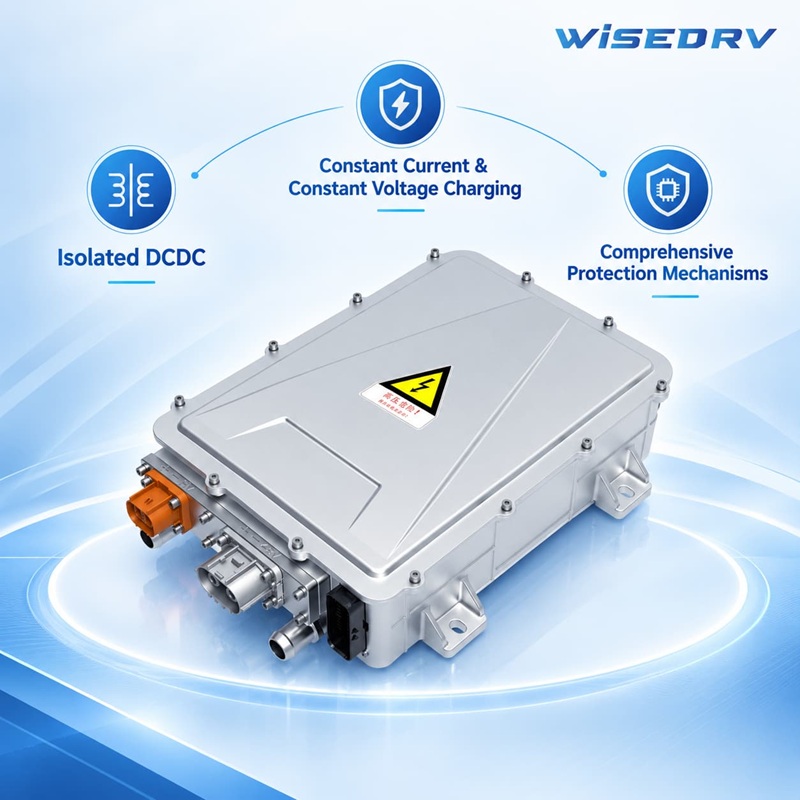
    The Role of DCDC Converters in Electric Vehicles The DCDC converter is one of the most overlooked yet indispensable core components in electric vehicles. Although it does not directly drive the wheels, without it, almost all the auxiliary systems in the vehicle would fail to function properly.   In simple terms, the role of the DCDC converter is to convert one type of direct current voltage into another. In electric vehicles, it can increase or decrease the voltage according to the requirements of the system architecture, thereby enabling energy transfer between different voltage-level subsystems and providing power for the vehicle's auxiliary systems.   Ensuring the stable operation of auxiliary systems The auxiliary systems in electric vehicles cover various electronic control units, and all of them require stable power supply. However, the high-voltage direct current output from the battery cannot supply power to these devices.   The role of the DCDC converter is to establish a stable power supply channel between the battery and the auxiliary systems. Through voltage conversion and electrical isolation, it ensures that the auxiliary systems can obtain continuous and stable power at any operating condition, while also guaranteeing the normal operation of safety-critical loads such as braking, steering, and emergency lighting.   If the converter fails, the auxiliary systems will lose power supply, and even if the vehicle still has driving power, it will become unsafe and unable to move due to the inability of control electronic equipment to work.   The above is the basic function of the DCDC converter in general electric vehicles. However, in commercial electric vehicle fleets, the situation is much more complex.   Designed for electric commercial vehicles In commercial vehicle fleets, the role of the DCDC converter becomes even more prominent. Box vans, buses, and light trucks, for example, not only need to operate for long periods but also carry a large amount of overhead loads: refrigeration units, telematics systems, driver monitoring systems, and multiple display screens. These devices often require higher voltages than the chassis battery to function properly, and the chassis typically provides low-voltage direct current.   This places higher demands on the DCDC converter, not only requiring voltage conversion but also maintaining stable output under load conditions to meet the vehicle's high-intensity and long-duration operation requirements.   The booster dc to dc converter for commercial EV can achieve the conversion of the chassis' low-voltage electricity to the high-voltage level required by the upper-mounted system and ensure stable output voltage even under load fluctuations. This significantly improves the reliability of the vehicle, which is precisely the core requirement that many fleet operators value most.   Safety-oriented isolated converter design In the high-intensity operation scenarios of commercial vehicle fleets, safety is the primary prerequisite for the design of the DCDC converter. Since the converter connects the high-voltage power system and the low-voltage safety network, it must provide electrical isolation, fault protection, overcurrent limitation, and thermal management.   This is precisely why the safety-focused isolated boost converter design is so important. The isolation design can prevent dangerous high-voltage faults from being conducted to the low-voltage side, thereby protecting the safety of drivers, passengers, and maintenance technicians. At the same time, it also helps meet automotive functional safety requirements and electromagnetic compatibility standards.   High-power boost requirements While meeting safety requirements, the chassis architecture of commercial vehicles has imposed the requirements of boost conversion and high power on the converters. In the chassis architecture of commercial vehicles, the converters need to increase the voltage from a lower level to a higher level to supply the high-voltage chassis-mounted equipment. When the chassis-mounted system requires power supply from the low-voltage power source of the chassis, a high-power step-up DC-DC converter is needed. Such applications are very common in commercial electric trucks, operation vehicles, and dual-voltage systems, and require the converter to efficiently transmit electrical energy under high current while avoiding overheating and excessive losses.    Xiamen WISE: 48V to 320V Chassis DCDC Platform For this commercial vehicle scenario, our company has developed and manufactured a 48V to 320V chassis DCDC product platform. It is specifically designed for the chassis-mounted system of commercial vehicles. The input voltage range is 40–58Vdc, the output is stable at 200–400Vdc, and it adopts isolation design and liquid cooling for heat dissipation, meeting the comprehensive requirements of commercial vehicles for safety, power, and reliability. The following table summarizes its core specification parameters: Item Specifications Product Type DCDC Controller Input Voltage Range 40–58Vdc Rated Input Voltage 48Vdc Output Voltage Range 200–400Vdc Max Output Current 25A Rated / Peak Output Power 4kW / 5kW System Control Voltage 12Vdc Cooling Method Liquid Cooling (50% Water & Ethylene Glycol Mixture) Coolant Flow Rate 12–15L/min Protection Class IP67 Control Communication Protocol CAN2.0 Communication Baud Rate 500kbps     The Future Trends of DCDC Converters for Electric Commercial Vehicles From an industry perspective, a DCDC converter is not merely a voltage adapter; it is more like a management center that ensures the normal operation of the vehicle's on-board systems.   As electric vehicles move towards higher-voltage platforms and larger fleets of electric commercial vehicles, the converters will continue to evolve: higher efficiency, higher power density, and more intelligent diagnostic functions.   If you are looking for a reliable boost DCDC solution for the on-board systems of commercial electric vehicles, please check out our 48V to 320V 48V to 320V on-board DCDC product platform, or contact us directly for detailed specifications and selection support.  
    Read More
  • What is the purpose of the motor controller? How can one select the appropriate controller for different types of two-wheel electric vehicles?
    What is the purpose of the motor controller? How can one select the appropriate controller for different types of two-wheel electric vehicles?
    Sep 21, 2026
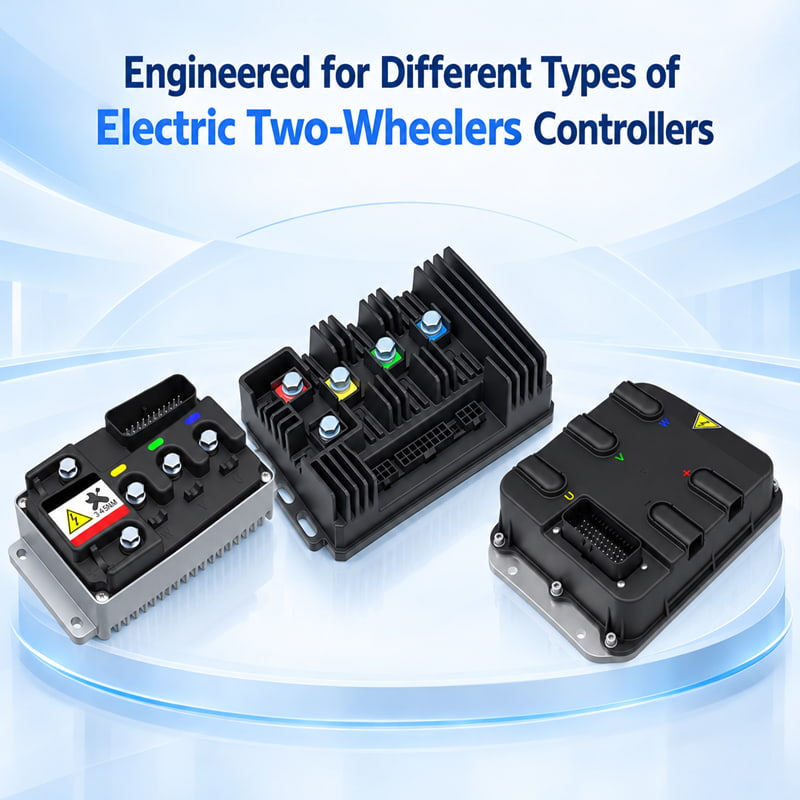
    The core role of the motor controller in electric vehicles For electric vehicles, the motor controller is a crucial component of the entire electric drive system, connecting the battery system, the motor, and the vehicle control system. It is responsible for managing the transmission process of electrical energy from the battery to the motor, converting the electrical energy efficiently and stably into the power required for vehicle operation.   During the actual operation of the vehicle, whether it is starting, accelerating, climbing, maintaining a constant speed, or decelerating and braking, the motor controller will adjust the current output and the motor response in real time according to different working conditions, ensuring that the vehicle maintains a smooth and efficient power performance.   For electric two-wheelers, the importance of electronic control is even more prominent. Due to the limited space and diverse application scenarios of two-wheelers, the controller not only needs to meet the power output requirements, but also needs to take into account energy consumption, handling experience, and long-term operational stability. A properly matched controller can fully utilize the motor performance, improve the vehicle's acceleration response capability, and help users obtain a more comfortable and safe riding experience.   Improving the overall performance of electric two-wheelers As the electric two-wheeler market continues to grow, the demands for power systems among different types of vehicles are gradually becoming differentiated.   For example, electric scooters used for urban commuting focus more on range, operational stability, and a comfortable driving experience; while high-speed electric motorcycles require stronger power response, higher current carrying capacity, and better heat dissipation performance.   Therefore, the motor controller is not merely responsible for providing power output; it needs to be precisely matched with the motor, battery, and overall vehicle application requirements. If the controller's power is insufficient, the vehicle may encounter power shortage issues during acceleration, climbing, or high-speed operation; if the control strategy does not match the motor performance, it will also affect the vehicle's efficiency and driving experience.   Choosing a reasonable controller can help the vehicle achieve the optimal balance of power performance, energy utilization efficiency, and system reliability.   Choose the appropriate controller based on different applications For electric two-wheelers, different speed levels and power requirements correspond to different electronic control configurations. For high-speed electric two-wheelers with speeds ranging from 60-80 feet per minute and 100-120 feet per minute, there are different requirements for the voltage, current output capacity, and control accuracy of the controller. It is necessary to select a matching electronic control solution based on the vehicle performance positioning.   For electric two-wheelers with a speed range of around 60-80 feet per minute, the controller needs to have stable power output capability and efficient energy management capability to meet the application requirements such as urban commuting, daily travel, and short to medium-distance transportation.   In practical applications, for 60-80 feet per minute electric two-wheelers, the controller can choose an adapter with a voltage range of 48V-72V or 48V-96V according to the motor power and battery system requirements to meet the power performance and range needs of different vehicle models.   For high-speed electric motorcycles with a speed of 100-120 feet per minute, the vehicle has higher requirements for power output, control accuracy, and system stability. Such vehicles are usually used for long-distance travel and high-performance riding scenarios, and require the controller to have stronger current handling capacity and continuous operation capability.   For high-speed electric two-wheelers with a speed of 100-120 feet per minute, it is usually necessary to select a high-performance controller with a voltage range of 48V-72V based on the motor power, battery capacity, and overall load conditions to achieve a balance between power performance, efficiency, and reliability.   Two-wheel vehicle electric control solution Different types of electric vehicles have significant differences in technical requirements for controllers. Urban commuting electric bikes, high-speed electric motorcycles, and electric tricycles have distinct characteristics in terms of power demand, communication methods, heat dissipation design, and control strategies.   Therefore, for different vehicle application scenarios, we have developed a three-category dedicated motor controller product matrix. Relying on the mature 48V-based motor controller design, medium-power electric vehicles can achieve the optimal balance between voltage adaptation, power performance, and system efficiency. This provides stable and standardized electronic control bases for different models, and through precise scene-specific motor controller type selection logic, deeply adapt to the needs of all scenarios for two-wheel vehicle travel, optimize the coordination efficiency of controllers, motors, batteries, and the entire vehicle system, and help automakers create highly adaptable and highly reliable electric products.     The 60-80 km electric two-wheelers are mainly used for urban commuting, daily transportation and short to medium distance travel. The core requirements are stable power output and efficient energy management. The adaptability and cost performance of the electronic control system are also highly demanded. For this scenario, we have developed two dedicated electronic control products. They can be selected flexibly based on the motor power of the entire vehicle and the battery configuration, precisely matching the regular and mid-to-high-end 60-80 km models, optimizing the coordination efficiency of the three power systems of the entire vehicle, and balancing the power performance and range. Product Type Core Configuration Parameters Features Application Scenarios 48V – 72VPure Electric & Hybrid ECU Products Rated Voltage: 48 / 60 / 72 Vdc Supports Start-Generation-Power Assist Two-WheelerSpeed: 60 – 80 km/h Optional MOSFET Module Sensor: Hall + Magnetic Encoder Bluetooth Function 48V – 96VPure Electric ECU Products Rated Voltage: 48 / 60 / 72 Vdc Magnesium Alloy Lightweight Material Two-Wheeler / Three-WheelerSpeed: 60 – 80 km/h Optional MOSFET Module Sensor: Hall + Magnetic Encoder Integrated Wheel Speed Detection, Bluetooth Function, UDS and OTA   The 100-120 cm high-speed electric motorcycles are mainly used for long-distance travel and high-performance riding scenarios. They have extremely high requirements for the power output, control accuracy, load capacity and operational stability of the electronic control system. For this high-speed model, we have specially developed high-performance electronic control products, which can perfectly meet the running needs of high-load, high-speed operation of high-speed electric motorcycles, achieving the ultimate balance of vehicle power, efficiency and reliability. The core information of the product is as follows: Product Type Core Configuration Parameters Features Application Scenarios 48V–72VPure Electric ECU Products Rated Voltage: 48/60/72 Vdc Optional MOSFET Module Electric MotorcycleSpeed: 100–120 km/h Rated / Peak Phase Current: 160A / 350A Low Internal Resistance MOSFET Sensor: Magnetic Encoder Bluetooth Function, UDS, OTA, etc.   Intelligent control technology drives the development of electric mobility With the continuous growth of global electric transportation, motor controllers are upgrading from traditional power control components to intelligent and high-efficiency control systems.   Modern electronic control technology not only focuses on power output, but also integrates intelligent communication, OTA upgrades, wheel speed detection, and more precise energy management functions, enabling electric vehicles to achieve higher efficiency, greater stability, and more intelligent operation experiences.   For customers who need to develop high-performance electric vehicles, choosing a controller supplier with technical research and development capabilities and product experience is very important. The high-performance AC motor controller for electric vehicles can provide more stable power control capabilities for electric vehicles and support the development needs of future electric transportation products.   As a professional motor controller supplier, WISE focuses on the research and development and manufacturing of electric drive products in electric two-wheelers, electric three-wheelers, and other electric transportation applications. Through continuous optimization of control technology and product design, we provide reliable and efficient motor controller solutions for global customers, helping the electric transportation industry continue to develop.  
    Read More
  • Why do most electric vehicle manufacturers opt for permanent magnet synchronous motors - is this mainstream choice suitable for your project?
    Why do most electric vehicle manufacturers opt for permanent magnet synchronous motors - is this mainstream choice suitable for your project?
    Sep 17, 2026
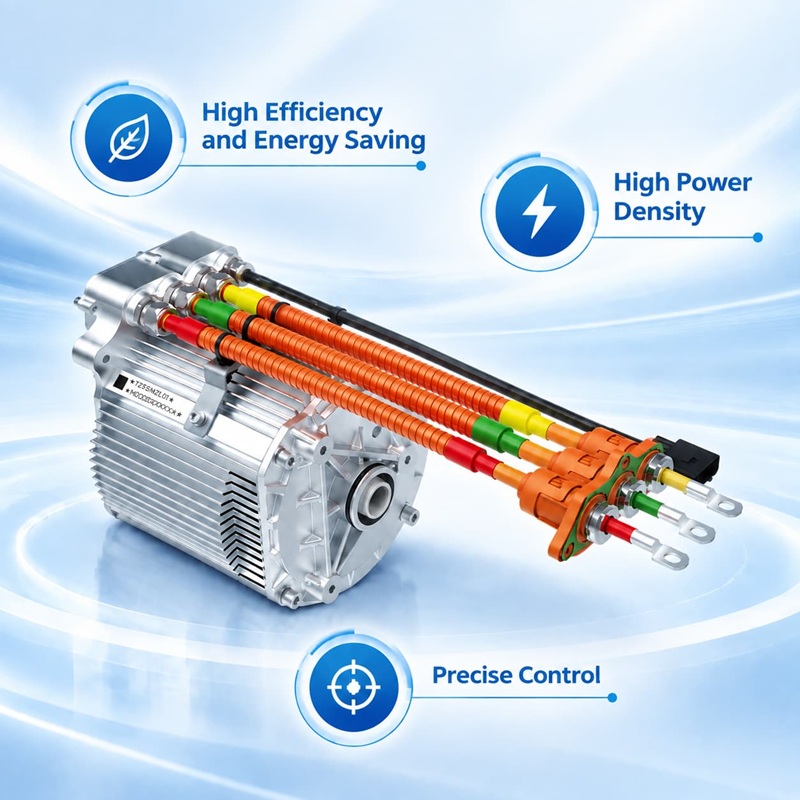
    The underlying logic of choosing PMSM In the powertrain of pure electric vehicles, the permanent magnet synchronous motor is one of the most widely used motor types. It has been widely adopted in the market because it achieves a good balance in terms of efficiency, power density, and low-speed torque response, and these three aspects directly determine the vehicle's range, overall layout, and driving experience.   To determine whether it is truly suitable for your vehicle, you need to first assess your operating conditions. For our permanent magnet synchronous motor, its application scenarios include micro vehicles, tricycles, and construction machinery platforms. We have specially designed for these scenarios to ensure that it can still perform at its best in more demanding working conditions.   PMSM Motor in EV: Why It Outperforms Alternatives The rotor of the permanent magnet synchronous motor is equipped with permanent magnets, and the magnetic field is always present. The rotor does not require induced current, and thus there is no rotor copper loss, which is one of the advantages over other types of motors. This enables the motor to maintain high efficiency over a wide range of speeds, rather than performing well only under specific conditions. For frequent start-stop urban conditions and continuous load construction machinery scenarios, this efficiency advantage will be particularly significant.   Power density is the second reason. With the same output power, the PMSM is lighter in volume and weighs less. A well-designed permanent magnet synchronous motor can output more torque in a relatively compact volume.   Taking our 96V high power density PMSM for electric vehicle application as an example, it can output competitive peak torque without forcing a major change in the axle layout. Our 96V platform achieves a peak of 15kW, a peak torque of 65Nm, and a peak speed of 7500rpm within the 60-108Vdc operating range. It covers the needs of different types of vehicles while achieving lightweight design, leaving more space for the vehicle's layout and load capacity.   PMSM Motor for Electric Car: The Flat-Wire Design Realizes Efficiency Advantages The efficiency advantage of the permanent magnet synchronous motor largely depends on the winding design. Compared to traditional round wires, the flat-wire winding has a higher slot fill rate and shorter ends, thus outputting higher efficiency and shorter axial length in the same volume. This is the core value of the hairpin winding PMSM motor in the EV powertrain solution.   Our permanent magnet synchronous motor adopts this flat-wire design. Through the coordination of conductor geometry design and heat dissipation path, the AC copper loss in the high-speed zone is controlled within a reasonable range, allowing this 96V pure electric power platform to maintain stable output at a peak speed of 7500rpm. We do not regard the system lightweighting and high power density as mere promises, but rather through the collaborative optimization of winding design, magnetic circuit design, and structural design, each parameter can be verified in real-world conditions, making the product truly lightweight and efficient.   Xiamen WISE's PMSM: Tailored for Micro Vehicles and Construction Machinery Platforms Are you still struggling with the selection and matching of motors? If your project requires an electric drive power product that is compatible with micro vehicles, tricycles, or construction machinery vehicles, our product precisely covers these scenarios and meets the requirements of lightweight, high power density, and continuous output capacity.   Our IP67 lightweight PMSM motor for electric car solution supplies the motor and controller as a complete set, and the entire system uses natural air cooling; It has an IP67 protection level, capable of withstanding dust, water immersion and vibration environments; CAN2.0 communication and 12V low-voltage control.   Most car manufacturers choose permanent magnet synchronous motors, mainly based on "what exactly is needed for my operation conditions". If you have confirmed your own operation requirements, the selection process will be much clearer.     Are you ready to match the correct motor for your project? If you are evaluating permanent magnet synchronous motors for micro vehicles, tricycles or light commercial vehicle platforms, we can help you determine if our 96V platform is suitable for your application. Click on the image above to learn about our corresponding electric drive products, or contact us directly via our official email to discuss your project with our engineering team.
    Read More
  • Apart from the battery, why is the electric drive system also a key component in the development of new energy vehicles?
    Apart from the battery, why is the electric drive system also a key component in the development of new energy vehicles?
    Sep 14, 2026
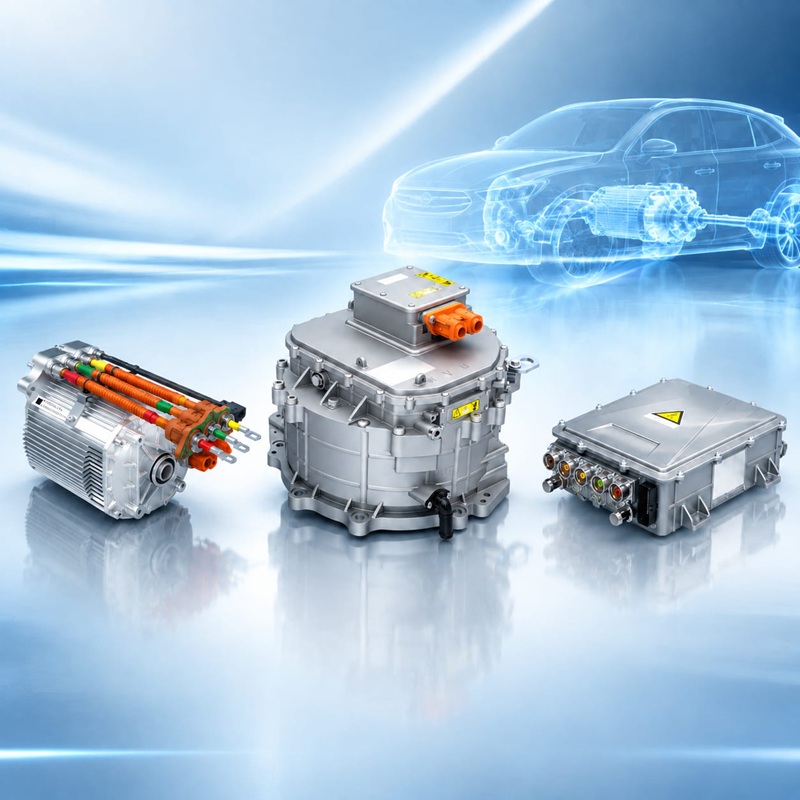
    The development of new energy vehicles cannot be separated from the collaborative effect of the "three electric systems", which include the battery, motor, and electronic control as the three core components. From the perspective of the general public, battery technology has always been of great market concern. And as an important part of the "three electric systems", the motor and electronic control also play significant roles in power output, precise control, and system coordination. For new energy vehicles, the high-efficiency and high-reliability electric drive power system directly affects the power performance, driving experience, and long-term stability of the entire vehicle.   How does the electric drive system affect the performance of new energy vehicles? The electric drive system plays a role in power output, precise control, and energy conversion for electric vehicles. And different vehicle models have different requirements for the electric drive system: Urban logistics vehicles need stability during long-term operation; Engineering and special vehicles need stronger load capacity and reliability; Passenger vehicles need smoother power response and precise control. To meet these practical application needs, the coordination and cooperation among the motor, electronic control, and the entire vehicle system are required. To assess whether an electric drive solution is mature and qualified, the following factors need to be considered: Motor performance; Control strategy; Installation space; System efficiency; Vehicle operating environment. A complete electric drive system must ensure a proper matching of the synergy between the motor and the controller, achieving a balance among power output, control accuracy, and system efficiency, thereby helping the vehicle achieve higher operating efficiency, more stable power performance, and better driving experience.   Integrated electric drive system enhances the development efficiency of new energy vehicles As electric vehicles continue to evolve, more and more vehicle manufacturers are also pursuing more lightweight and efficient power system solutions. The integrated high-reliability EV drive system reduces the complexity of system installation while improving overall matching efficiency and operational reliability. Compared to traditional solutions, the integrated design brings significant advantages to the power system structure: Optimizes the vehicle space layout; Reduces the difficulty of system integration; Enhances the stability of the power system; Simplifies subsequent maintenance requirements. The WISE drive system adopts a two-in-one design concept of motor and control, achieving a more compact system layout through a crankshaft direct connection structure, while featuring high reliability and an architecture design that meets ISO26262 functional safety requirements, providing a stable, safe and efficient power solution for new energy vehicle projects. For commercial vehicles and electric vehicles that require long-term operation, highly integrated electric drive systems can effectively reduce development complexity and enhance the overall application value of the vehicle.   Lightweight high-power density motors optimize vehicle performance The motor is one of the core components for power output in new energy vehicles. It has a direct impact on the vehicle's acceleration capability, operating efficiency, and driving experience. During the development of new energy vehicles, the performance of the motor needs to be comprehensively evaluated: Torque output capacity; Heat dissipation performance; Installation space; System weight; Overall efficiency. As vehicle requirements for lightweight and high performance continue to increase, the motor needs to achieve higher output capacity within a limited space. The lightweight electric drive motor for cars adopts a lightweight design concept, which can help vehicle manufacturers optimize space utilization, improve system efficiency, and reduce vehicle weight. The WISE motor uses flat-wire winding technology, optimizing electromagnetic design to increase motor power density while reducing system weight. This enables the product to achieve higher performance output within a limited installation space, making it more suitable for applications in new energy vehicles with high requirements for efficiency, space, and power performance. For various electric vehicle applications, lightweight and high-power density motors bring significant improvements to the vehicle, enhancing the vehicle's power performance and optimizing the interior space layout.   Automotive-grade motor controllers ensure stable and safe power The motor is responsible for power output, and the controller is responsible for precise power regulation. The motor controller needs to adjust current, voltage, and torque output in real time and optimize power response based on the vehicle's operating status to ensure stable operation of the vehicle under different conditions. In the development of electric vehicles, the controller affects the vehicle's power performance, control accuracy, and operational reliability. Automotive-grade motor controllers for electric vehicles can achieve more precise power management through advanced hardware design and intelligent control strategies, and improve system operational stability. The WISE controller uses automotive-grade IGBT technology and combines intelligent algorithm protection mechanisms to achieve: More precise torque control; More stable low-speed operation performance; More comprehensive system protection capabilities. At the same time, the controller architecture complies with ISO26262 functional safety requirements and can meet the higher demands of new energy vehicles for safety, reliability, and long-term operational stability. For OEM customers, high-quality controllers need to achieve power control, and more importantly, ensure the vehicle maintains stable operation throughout its lifecycle.     Build a complete electric drive solution for new energy vehicles The development of new energy vehicles cannot be separated from efficient and reliable power systems. For vehicle manufacturers, choosing a reliable electric drive system supplier means obtaining the complete capabilities of motor development, electrical control matching, system integration and application support.   WISE focuses on the research and development and manufacturing of new energy electric drive systems, providing motors, motor controllers and electric drive solutions for new energy vehicles, commercial vehicles and special vehicles. Since its establishment, WISE has been committed to helping customers improve vehicle development efficiency and achieve more stable and reliable electrification applications. Explore our electric drive system solutions From product selection to project matching, WISE provides complete electric drive system support for new energy vehicles and electrification applications. If you need to know about motors, motor controllers and electric drive solutions, or discuss the application requirements of specific models, please contact our engineering team. Email: wisedrv@wiseelec.cn We will provide technical communication, solution matching and project support based on your application scenarios, helping you find the suitable electric drive solution.  
    Read More
  • The golf cart struggles to climb uphill. What is the core reason for this: the motor or the controller?
    The golf cart struggles to climb uphill. What is the core reason for this: the motor or the controller?
    Sep 10, 2026
    Identifying The Fundamental Cause Of Insufficient Climbing Performance Most golf cart users often encounter uphill driving conditions, and at the same time, a series of power-related problems arise, such as sudden drop in speed, insufficient climbing power, frequent stalling and engine shutdown on steep slopes. Many owners are unable to immediately identify the root cause of the problem and are not clear about what exactly is causing the insufficient vehicle power. Is it due to the decline of the motor, the insufficient output of the controller, or the mismatch in the matching degree between the two, resulting in imbalance? This makes accurately identifying the problem the core prerequisite for vehicle operation.     1. High-density motor enhances climbing torque To address the issues of insufficient climbing power and poor power stability of golf carts, choosing to use high power density hairpin golf cart motor is one of the excellent upgrade solutions. This type of motor adopts professional flat-wire winding technology, different from traditional round-wire motors. Under a compact and lightweight body structure, it achieves extremely high power density. It can output strong and continuous peak torque, ensuring the golf cart's stable operation during long-term and repeated climbing conditions. At the same time, the optimized heat dissipation structure solves the problem of power attenuation during heavy-load climbing, perfectly adapting to the frequent climbing usage scenarios of golf carts.   2. Lightweight motor upgrade solution If a high-pressure golf cart has a higher upgrade limit for power, a reasonable upgrade solution does not require significant changes to the original vehicle structure and can avoid additional weight burden on the body. Adhering to the need for stronger power of the vehicle, our lightweight 96v golf cart motor upgrade adopts an ultra-lightweight structural design, without adding additional load to the chassis of the golf cart. After all, excessive weight is one of the key factors limiting the climbing performance. Choosing a lightweight upgrade solution can fully release the torque reserve of the vehicle and the electric drive, achieving a significant improvement in the climbing performance of the golf cart without modifying the original vehicle structure or reducing the installation difficulty.   3. Independent power system optimizes climbing performance Simply replacing a single motor equipment cannot fully release the climbing potential of a golf cart. Unlike mainstream power products on the market, our golf cart power system adopts a professional discrete structure, with the motor and controller being two completely independent core components that can be disassembled separately. The unique structural design makes the product more adaptable and easier to maintain in the future, and the matching degree between the motor and the electronic control is precise. And the precise-tuned hill climbing optimized golf cart motor and controller complete electric drive combination can achieve precise power coordination, creating a more stable and efficient climbing power output system.   4. Select the appropriate upgrade solution as needed When a golf cart encounters problems such as insufficient climbing power, there are different upgrade solutions. It is necessary to handle the situation based on the actual conditions of the vehicle. If the motor is severely aged and the power has declined, replacing a high-performance motor can effectively restore the climbing torque; if the motor is in good condition and only has limited power release issues, upgrading the matching controller can fully activate the vehicle's power potential. For users who pursue long-term stable climbing performance and strictly control maintenance costs, our professional motor controller matching solution can adapt to your vehicle needs.   Overview of Core Product Parameters Product Module Core Features Application Advantages High-power Flat-wire Motor Flat-wire winding process, high power density, excellent heat dissipation Sustained high torque output, eliminates power attenuation during heavy-load climbing Lightweight Design Lightweight structure, non-destructive OEM compatibility, high torque reserve No additional vehicle weight burden, easily improves gradeability     If you want to learn more about the power upgrade solutions for golf carts or mini vehicles? Click here to view the full range of high-performance motors and controllers suitable for mini vehicles, and match the optimal solution for your vehicle project.   Whether you need precise verification of technical parameters, customizing an exclusive climbing power plan, conducting sample tests, or conducting batch cooperation, you can send your project requirements to our official email: wisedrv@wiseelec.cn.   You can also visit the contact page on the official website to submit your requirements. Our professional engineering team will provide you with one-on-one technical consultation and dedicated project implementation support.
    Read More

  • What kind of drive and control system is needed for today's electric two-wheelers?
    What kind of drive and control system is needed for today's electric two-wheelers?
    Sep 09, 2026
    With the widespread adoption of the concept of short-distance green travel, the market penetration rate of electric two-wheelers has continued to rise, and the scale of the cycling population has also been expanding. From ordinary commuters and delivery riders for daily commutes, to various users who enjoy leisure cycling and climbing slopes, the cycling scenarios have become increasingly diverse, and the demands of users have also become more specialized.   Whether it is commuting users or customers with different needs, their core requirements for electric two-wheelers will also vary. Some prioritize energy efficiency, some value continuous torque and load capacity, and there are users who expect intelligent adjustable and multi-mode switching power experiences. This also means that a single traditional controller is no longer able to meet the cycling experiences of different users. 1. Commuter Users: Range and Smoothness For commuters who travel about 10-15 kilometers per day, these users are extremely sensitive to range. The electronic control system must have high-precision current sampling and estimation algorithms to avoid mileage misreporting. During frequent start-stop conditions, the torque output must be linear and smooth, eliminating start-up jolts, while also suppressing electromagnetic noise to ensure quiet riding.   2. Delivery Riders: Heat Resistance and High Load Capacity Delivery workers and courier professionals have specific demands for the electronic control system, focusing on high load tolerance and thermal stability. This group travels extremely long distances daily and constantly faces high-load climbing, sudden acceleration, and frequent braking in high-intensity conditions. The electronic control system must have stable operation capabilities across a wide temperature range. The design of power components and heat dissipation structures must ensure that it does not trigger thermal protection and reduction in power output under continuous high-current output, maintaining the continuity and controllability of power output. At the same time, the response speed and recovery efficiency of the regenerative braking system in frequent start-stop scenarios are subject to higher requirements. The electronic control system must achieve coordinated control of mechanical braking and electric braking to ensure the balance between braking safety and energy recovery efficiency.   3.Performance Enthusiasts: Response and Precision For electric motorcycle users with performance-oriented preferences, the core focus is on the speed of power response and the accuracy of control. They require the electronic control system to have a faster torque response bandwidth, higher current tracking accuracy, and effectively reduce torque pulsation. The controller must support multiple power output modes and traction control, adapting to the power adjustment requirements of different scenarios.   4.Shared Mobility Operators: Durability and Maintenance Shared mobility operators and fleet managers place more emphasis on the durability and maintainability of the electronic control system. Due to the special nature of vehicle operation, they need to face frequent changes in drivers, with highly variable usage habits, and the electronic control system must have a sound fault diagnosis and protection mechanism, including multiple self-protection functions such as overcurrent, overtemperature, undervoltage, and anti-loss of control. At the same time, it supports remote firmware upgrades and data transmission capabilities, facilitating the maintenance team to carry out predictive maintenance and rapid fault location, reducing vehicle repair rates and maintenance costs.   5.The Underlying Logic of Drive Electronic Control Although different user groups have varying focuses on drive electronic control, the common underlying logic that runs through all application scenarios is highly consistent - namely, safety, efficiency, and reliability. These three dimensions constitute the underlying logic of drive electronic control products and are also the prerequisite for any differentiated functional innovation.   In terms of safety, the electronic control system must establish a complete system protection mechanism, covering multiple fault detection and handling logic for overvoltage, undervoltage, overcurrent, overtemperature, inter-phase short circuit, and runaway prevention, ensuring that it can actively limit or cut off power output in extreme conditions to avoid vehicle risks.   In terms of efficiency, the electronic control system uses magnetic field orientation control algorithms to keep the motor operating at high efficiency under different speeds; it also supports regenerative braking, converting kinetic energy into electrical energy and charging the battery during coasting or downhill, reducing energy waste. The good performance of the algorithm requires hardware support. The modular controller for brushless motor 48V achieves more efficient energy conversion through precise matching of modular power components and different motors.   In terms of reliability, the electronic control system must undergo environmental tests such as high and low temperature cycles, wet heat, salt spray, and vibration to meet and pass the reliability verification of the product, ensuring that the electronic control system can work stably in different climate conditions for a long time.   6.WISE's Drive Electronic Control Products in Xiamen WISE's drive electronic control products have fully met the above basic performance requirements and further built differentiated technical advantages.   Multifunctional integrated operation mode. The product supports intelligent switching between start-up, power generation, and assistance modes, covering all scenarios. It also provides two control strategies: constant voltage and constant current. This is a smart brushless controller with integrated modes. These three modes are not simply combined but are intelligently decided and seamlessly switched based on the riding conditions, covering all scenarios of power demand for the controller.   It features a configurable modular design. The product offers a modular MOSFET selection scheme, allowing for flexible combination of power devices according to power levels and application scenarios, balancing performance limits and cost control. Additionally, it can be optionally equipped with Bluetooth functionality, enabling wireless data interaction with mobile terminals, supporting intelligent functions such as parameter configuration, operation status monitoring, and remote firmware upgrade. The architecture design of this 48 volt controller with Bluetooth significantly reduces the difficulty for maintenance personnel and shortens the time to solve problems.   Xiamen WISE has always been guided by the actual application needs of users, continuously deepening the fundamental technological innovation and functional expansion in the field of drive electronic control. It is committed to providing the industry with drive electronic control solutions that combine performance, reliability and intelligent level.   If you want to know more about the drive electronic control of electric two-wheelers, you can click on the picture on the left to view the product details or send your requirements to our email: wisedrv@wiseelec.cn.
    Read More
  • How do motor suppliers make their evaluations? The core criteria that procurement personnel must consider
    How do motor suppliers make their evaluations? The core criteria that procurement personnel must consider
    Sep 04, 2026
    Selecting high-quality motor partners When purchasing electric drive components for commercial vehicle and off-road equipment projects, the purchasing party often has difficulty selecting the appropriate partners from among numerous manufacturers. It is not easy to find qualified EV motor suppliers that can balance product performance, cost control, and long-term stable delivery. Many purchasing teams merely compare sample parameters but overlook whether the manufacturers have the stability for mass production, which can easily cause hidden problems for subsequent projects.   Standardizing review criteria To avoid project risks caused by unqualified suppliers, the purchasing team must carry out work based on systematic motor vendor evaluation criteria during the supplier qualification review stage. Supplier assessment needs to conduct a comprehensive evaluation from multiple dimensions such as technical strength, product performance, quality management system, after-sales service, and project delivery performance. Evaluation Dimension Core Inspection Items Capabilities Of Qualified Suppliers Technology R&D Capability Motor Design Capability, Electromagnetic Simulation, System Matching Capability Capable Of Independently Developing Hair‑Pin Permanent Magnet Synchronous Motors, And Performing Parameter Optimization According To Vehicle Model Requirements Product Performance Power Density, Peak Torque, Efficiency Range, NVH Performance, Ingress Protection Rating Products Meet Requirements For High Efficiency And High Reliability, And Adapt To Complex Application Environments Quality Management System IATF 16949 Certification, Production Process Control, Reliability Test Establish A Complete Quality System To Ensure Consistent Product Quality Mass Production & Delivery Capacity Production Capacity Scale, Supply Chain Management, Project Delivery Experience Possess Stable Mass‑supply Capacity To Support Long‑term Project Cooperation After‑sales & Technical Support Product Maintenance, Technical Response Provide Technical Support To Accelerate Project Implementation   Comprehensive assessment of electric drive supporting capabilities Technical strength assessment constitutes the core segment for motor supplier evaluation. Purchasers first place high priority on verifying the hardware performance of motor equipment itself. The motor’s Peak Power, High Torque Density, High‑efficiency Operating Range, Optimized NVH Noise‑reduction Performance and High‑grade IP Protection Performance serve as core evaluation indicators. Meanwhile, authoritative test reports covering Vibration Shock, High‑low Temperature Cycling, Salt‑spray Aging and other items act as critical evidence to validate product durability and environmental adaptability.   In addition to the flat wire motor hardware equipment and the separate controller for the matching, high-quality electric drive suppliers in the industry can also provide reliable system-level advanced PMSM drive solutions. For new energy vehicle projects, through the system-level matching solution, it is possible to achieve coordinated matching between different components, reduce compatibility issues during the development process, improve project introduction efficiency, and reduce later application risks.   Xiamen WISE provides high-performance flat wire permanent magnet synchronous motor solutions for application scenarios such as micro vehicles, tricycles, and construction machinery vehicles. Through high power density design, high efficiency operating range, and lightweight structural advantages, it helps customers achieve better power performance and system effects.   Our flat wire permanent magnet synchronous motor adopts advanced electromagnetic design and precise manufacturing processes, and is matched with our accompanying controller for system-level matching, forming a mature electric drive system solution. Through precise coordination between the motor and the control system, efficient power output and stable operation performance are achieved.   To learn more about the product specifications, performance parameters, and application cases of Xiamen WISE's flat wire permanent magnet synchronous motor and control system, please click on the right product image to view detailed product information and explore electric drive solutions suitable for different vehicle model requirements.   Verify strict quality control system The most crucial aspect of the quality system audit is to verify whether the enterprise possesses industry certifications, as well as the full-process quality control system from incoming material inspection to final product inspection, and the full-chain traceability mechanism for core materials. The purchaser also needs to verify the supplier's case studies of implementing the flat wire permanent magnet synchronous motor and its associated discrete controllers in similar working conditions, to ensure the stability of product performance and uniform quality during long-term mass production.   Evaluate stable delivery and supply capabilities Capacity and supply chain risks are key points that the purchaser cannot ignore in the audit. The purchaser needs to verify the supplier's annual production capacity and whether there are multiple channels for backup plans for core raw materials, to prevent supply disruptions caused by material shortages. At the same time, after-sales mechanisms such as technical support, spare parts supply, and clear warranty terms are also important assessment items to ensure the long-term stable operation of the project.   Ensure long-term stable cooperation in projects A complete supplier evaluation system can help the purchaser eliminate low-quality manufacturers that can only provide samples but cannot achieve stable mass production. It can also conduct a comprehensive assessment to select long-term high-quality partners that meet the project requirements for customers, effectively reducing procurement and technical application risks.   Want to learn more about professional electric drive product information? Click here to view detailed product materials, and match the optimal flat wire permanent magnet synchronous motor and discrete controller complementary solution for your project.   If you need to confirm technical parameters, customize exclusive solutions, apply for sample testing, or negotiate batch cooperation, you can send your project requirements to the official email: wisedrv@wiseelec.cn. Our professional engineering team will provide you with one-on-one technical consultation and full-process project implementation support.
    Read More
  • What are the key specifications that need to be considered when choosing and purchasing an electric vehicle motor controller?
    What are the key specifications that need to be considered when choosing and purchasing an electric vehicle motor controller?
    Sep 01, 2026
    During the development of electric vehicles, the motor controller is the core component of the entire vehicle's power system. The selection of the motor controller directly affects the power output performance and operational stability of the vehicle, and also relates to the cost of subsequent project modifications.    However, before making the selection, we need to focus on which parameters of the electronic control products to pay attention to. I have comprehensively sorted out the evaluation criteria for the selection, helping engineering and procurement personnel quickly screen out the motor controllers that are suitable for the project. 1. Matching core electrical specification parameters Electrical parameter matching is the foundation for the stable operation of the electric vehicle controller. All electric vehicle projects are based on the perfect compatibility of the electronic control system, battery, and motor. Therefore, when evaluating a product, it is necessary to carefully verify the entire set of electrical specification parameters to ensure that the electronic control product is fully compatible with the vehicle's battery pack and motor. This includes the working voltage range, peak current, rated power, and peak power. After all, different vehicle models have different electrical parameter requirements for the electronic control system. Only by achieving precise electrical parameter matching can the vehicle ensure smooth power output under any working conditions.   2. Optimizing Thermal Management and Environmental Adaptability Performance During high-power and long-duration operation, the electronic control unit generates a large amount of heat. If the heat dissipation efficiency of the electronic control unit is poor, the accumulated heat will cause a significant degradation of the unit's performance. Additionally, non-road and commercial vehicles operating outdoors are constantly exposed to complex environments such as dust, rain, and vibrations. At this point, the environmental tolerance of the product becomes extremely crucial. Therefore, when selecting, special attention should be paid to the cooling method and protection level of the electronic control unit to ensure that the equipment can maintain stable heat dissipation performance and operational performance under high-temperature and heavy-load conditions.   High-quality electronic control units on the market are generally liquid cooled ev controllers. The cooling medium uses a 50% water and ethylene glycol mixture coolant. This cooling method enables the electronic control unit to achieve stable heat dissipation during long periods of high-power operation. For commercial vehicles and non-road vehicles, the electronic control equipment will face complex environments. A high-reliability IP67 motor controller for ev is the best choice. It has excellent dustproof and waterproof capabilities and will not malfunction due to environmental factors.   3. Stringent Vehicle-Grade Safety Protection The motor controller is a core safety component of the entire vehicle, and the integrity and compliance of its protection mechanism directly affect driving safety. Standard vehicle-grade motor controllers must have a complete set of hardware protection mechanisms that can monitor the operating status in real time and promptly avoid various equipment damages and safety hazards caused by electrical faults.   For high-safety requirements in applications such as commercial vehicles and engineering vehicles, it is necessary to carefully verify whether the product's software and hardware architecture complies with the ISO 26262 automotive functional safety standard. Through multi-level redundancy protection design, the probability of sudden faults during vehicle operation and work can be minimized, meeting the strict requirements of vehicle-grade usage.   4. Reliable Communication and Software Capabilities Efficient data exchange between the controller and the entire vehicle is crucial for the coordinated operation of the vehicle. The communication capabilities and methods of the controller, as well as its intelligent functions, directly affect the control logic and fault maintenance efficiency of the entire vehicle. When making a choice, it is necessary to focus on the core communication interface specifications and preferentially select electronic control products equipped with standardized diagnosis and remote upgrade functions, which can significantly reduce the costs of later operation and modification.   Choose a professional commercial‑grade can bus motor controller. This type of electronic control supports CAN2.0 and CAN FD communication interfaces; generally, UDS diagnostic function can be selected, which can efficiently complete fault reading and troubleshooting; OTA remote upgrade can be selected to simplify the later firmware iteration work.   5. Compatibility of Position Sensors Position sensors are the core feedback components that enable precise control of motor operation by the controller. The type of sensor adaptation, anti-interference capability, and stability directly determine the speed and torque control accuracy of the motor, and affect the overall driving smoothness of the vehicle.   When selecting, it is essential to carefully verify the sensor adaptation scheme of the controller. Prioritize the matching of position feedback devices that are resistant to vibration, can withstand high temperatures, and have strong stability. This can effectively avoid signal interference and data deviation issues in complex working conditions, ensuring the smooth operation of the motor. The rotary transformer, as a position feedback device, is resistant to vibration and high temperatures and is highly suitable for commercial vehicles and construction machinery.   6. Two High-Performance Motor Controller Products Suitable for Multiple Scenarios Based on the above comprehensive selection criteria, we have launched two highly adaptable, highly reliable, and automotive-grade motor controllers, covering medium and high power requirements and precisely matching various electric vehicle development and production projects.   - 320V Plug-in Hybrid and Pure Electric Platform Controller Adaptable to 320V voltage platform, equipped with TC725 chip and automotive-grade IGBT, following ISO 26262 functional safety architecture, with built-in intelligent protection algorithm, achieving low-speed anti-shake and enhancing driving and riding quality. Liquid cooling cooling combined with IP67 protection, suitable for long-term heavy load and harsh outdoor environments; Resolver resolver transformer is resistant to vibration and high temperature; CAN2.0/CAN FD communication, optional UDS diagnosis, OTA upgrade, and quick high-voltage insertion for simplified assembly. Power range 40-80kW with multiple gear options to meet diverse power requirements.   - 320V/540V Plug-in Hybrid and Pure Electric Platform Controller Targeting medium and large power commercial and engineering equipment, with a wider voltage range, supporting 800V platform customization. Automotive-grade IGBT + ISO26262 safety architecture, featuring low-speed anti-shake and complete intelligent protection. Liquid cooling + IP67 protection, suitable for high-intensity outdoor operations; Resolver ensures vibration environment control accuracy; optional diagnosis and OTA upgrade, quick high-voltage insertion interface for convenient integration. Power range 60-100kW.   Selection Quick Reference Table Category Key Parameters Our Product Specifications Cooling & Protection Cooling / Protection Rating Liquid‑cooled (50% Water‑Ethylene Glycol) / IP67 Communication Interface Bus CAN2.0 / CAN‑FD Sensor Position Feedback Resolver Comprehensive Performance System Efficiency 98.5%   Want to know more? If you wish to gain a deeper understanding of our electric drive power products, please click here to view different types of electric drive power products and select the relevant ones that interest you.   If you need to confirm technical parameters, develop customized solutions, conduct sample tests, or engage in bulk cooperation, please send your project requirements to the official email: wisedrv@wiseelec.cn. You can also visit the "Contact Us" page to submit project information. Our engineering team will provide you with one-on-one professional technical consultation and exclusive project support.  
    Read More
  • What kind of e-drive system can really handle tough off-road and commercial vehicle conditions?
    What kind of e-drive system can really handle tough off-road and commercial vehicle conditions?
    Aug 28, 2026
    Challenges of non-road and commercial vehicles in operating conditions The working conditions faced by non-road and commercial vehicles are fundamentally different from those of ordinary passenger cars. Passenger cars generally operate on flat highways and urban commuting roads, with relatively easy running times and load conditions. In contrast, the former face completely different operating conditions. They need to navigate through rugged terrains and muddy construction sites, and endure long periods of continuous high-load operation and full-load climbing. So, which electric drive system can truly cope with these extreme conditions?   Core characteristics that an electric drive system must possess To become a qualified and reliable electric drive system, it must possess the following three core features. (1) High reliability Reliability is the foundation of everything. The operational nature of non-road equipment and commercial vehicles determines that if they stop, it will cause huge economic losses. Due to the special nature of non-road vehicles, the accompanying electric drive system must also operate stably under continuous vibration, temperature cycles, and load impacts. Therefore, the demand for durable direct-drive electric truck motor controllers in the market is increasing day by day. Such motor controllers, through rigorous design and thorough verification, significantly reduce the failure rate and fundamentally reduce the maintenance costs and unplanned downtime losses for users. In continuous operation scenarios such as mines and construction sites, this tested reliability will directly translate into production efficiency and economic benefits. (2) High protection capability Dust, mud, high-pressure water washing - these are common in non-road operation scenarios. A trustworthy electric drive system must have excellent environmental protection capabilities. An IP67-protected integrated motor controller is specifically designed to meet this requirement: The IP67 protection level means that the motor and controller are dust-proof and can be briefly immersed in water at a certain depth without being damaged, allowing the electric drive equipment to operate reliably in dusty, humid, and even short-term water-soaked environments. (3) High efficiency Efficiency directly affects the operating costs and endurance of equipment. In scenarios with high loads and long-term operation, even a small improvement in efficiency can lead to significant economic benefits. The high-efficiency electric car motors and controllers currently available on the market can achieve extremely high system efficiency throughout the entire working range. For non-road equipment that requires long-term continuous operation, this increases the production efficiency of the equipment and the effective working duration per charge, thereby enhancing the operational economic efficiency of the entire project.   Specific Technologies Supporting Core Characteristics Product characteristics are supported by specific technical systems.   (1)Thermal Management System - Liquid Cooling Technology Ensures Stable Temperature Thermal management is one of the most challenging issues in non-road electric drive systems. Under continuous high loads, thermal saturation becomes a limiting factor. Advanced liquid cooling technology controls the operating temperatures of the motor windings and stator within a reasonable range, significantly improving reliability and durability. The design of the thermal management system must take into account high-temperature operation and significant vibration from the very beginning.   (2)Structural Reliability - Anti-Vibration Design and Long-Life Assurance The vibrations and impacts generated by non-road and commercial vehicle equipment far exceed those of passenger vehicles. An excellent electric drive system needs an anti-vibration design to ensure the structural integrity under continuous mechanical stress. Impact and vibration simulations can reveal the effects caused by extreme weather, vibrations, impacts, salt fog, dust, and chemical corrosion scenarios.   Why Choose the WISE Electric Drive System When the industry's requirements for electric drive systems become increasingly higher, the WISE electric drive system provides a satisfactory product with comprehensive technical strength.   - Integrated Electric Drive Solution WISE designs a multi-in-one electric drive power equipment, enhancing the system's compactness and reliability. The integrated design not only reduces the system's weight and space occupation but also minimizes potential failure points, allowing equipment manufacturers and end-users to enjoy higher system efficiency and lower maintenance costs.   - Hardware and Software Safety and Reliability In terms of hardware reliability, the WISE electric drive system builds a solid foundation with three pillars: IP67 High Protection Level - Comprehensive dust and water protection, capable of coping with dusty, muddy, and humid harsh environments; Efficient Liquid Cooling Design - Precisely controls the temperatures of core components to ensure stable output under continuous high loads; High-Efficiency Motors - Optimizes equipment design to maintain excellent efficiency throughout the working range.   In terms of system safety, WISE strictly follows international functional safety standards. The architecture is developed in accordance with ISO 26262 functional safety requirements, ensuring the system operates safely and stably throughout its entire lifecycle. From hardware protection to software strategies, WISE builds a comprehensive security guarantee.   The Most Critical Core Competitiveness For non-road and commercial vehicles, the greatest core competitiveness of the electric drive system is just three words: Reliability.   This is not a simple literal definition. Rather, it represents the robust capability that operates stably day after day and year after year in dusty mines, muddy construction sites, corrosive harbors, and environments with extreme temperature variations. A reliable system means lower downtime losses, lower maintenance costs, longer equipment lifespan, and higher investment returns.   A truly excellent electric drive system must undergo extreme environment verification to stand out in the market and become the choice of mainstream industries.   The WISE electric drive system is precisely born for such a mission. From integrated hardware design to architecture compliant with ISO 26262 functional safety requirements, from efficient liquid cooling thermal management to IP67-level environmental protection, WISE provides a reliable electric drive solution for harsh conditions.   In the electric vehicleization wave of non-road and commercial vehicles, only systems that can withstand extreme tests can become true industry benchmarks. WISE, together with you, is heading towards a more reliable and efficient electric future. Are you looking for the right electric drive system for your own vehicle platform? → Click here to view our full range of electric drive products and find the solution that best suits your application scenario. → If you need confirmation of technical specifications, customized development, sample testing or cooperation for mass production, please send your requirements to the official email: wisedrv@wiseelec.cn. → You can also visit the Contact Us page to submit your project requirements. We will arrange one-on-one engineering technical consultation for you and provide targeted development support.
    Read More
1 2 3 4 5
Leave A Message
If you are interested in our products and want to know more details,please leave a message here,we will reply you as soon as we can.
submit

leave a message

leave a message
If you are interested in our products and want to know more details,please leave a message here,we will reply you as soon as we can.
submit
Contact Us: wisedrv@wiseelec.cn

home

products

WhatsApp

Contact Us