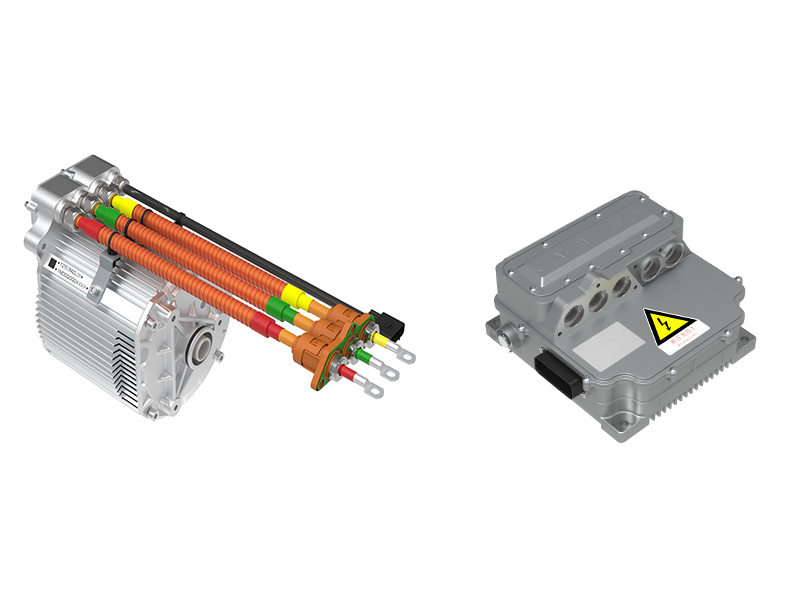
Standardization and modularization
Most integrated motor control solutions adopt dedicated hardware interfaces and closed software systems, which undoubtedly pose a problem for automotive engineers and cannot be changed for a long time. If such issues are left unresolved, it will be difficult for the products to be compatible with each other, and the previous products will also be unable to be reused.New projects often need to be designed from scratch, which has a negative impact on product launches and is also a waste of resources. Nowadays, the industry is shifting towards a more efficient model based on standardized hardware and software interfaces, while relying on a software platform that emphasizes modularity and autonomy to support this transition. By using this method, R&D engineers can quickly optimize the solutions and accelerate the innovation in the field of automotive motion control.
Standardization's Contribution to Integration
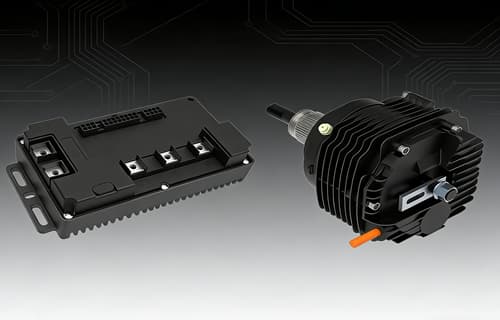
Consider an OEM engineering team developing a thermal management system for a next-generation electric SUV. They need a compact, reliable bldc motor with controller to drive the coolant pump while ensuring seamless integration with the vehicle’s zonal architecture. In the past, this would have involved months of low-level software tuning and hardware adaptation. By leveraging the AUTOSAR standard software layer and the unified mechanical installation interface, the existing motor controller platform can directly adapt to pumps, fans and actuators without the need for repeated rework. The support at the software level plays a crucial role. The modulation technology can effectively enhance voltage utilization and improve energy efficiency. The flexible angle decoding can be compatible with traditional rotary transformers and also adapt to the new generation RPS sensors, achieving compatibility for various types of motors without the need to modify the hardware.At WISE, we deliver this built-in flexibility to help system integrators reduce program risk and accelerate development timelines.
Drive platform expansion
Standardization also opens up new possibilities for platform-based development. A single variable speed motor and controller built on common communication protocols such as CAN FD can be seamlessly extended to be applied to various vehicle projects from entry-level passenger electric vehicles to heavy commercial trucks. Automotive manufacturers can respond more quickly to changes in market demands by simplifying the Bill of Materials (BOM) and reducing the verification work. Engineers can debug using PC-based tools, presenting visual and control capabilities during the calibration process to customers, thereby significantly reducing the development cycle. After allowing customers to choose such suppliers, the vision of transitioning from prototypes to mass production can be accelerated.
Simplified Service and Diagnostic Workflows
These advantages also extend to the operation and maintenance phases of the vehicle. When service technicians encounter electric motor and speed controller platform units in a software-defined vehicle, the standardized diagnostic interface enables rapid fault identification, and through the calibration function via in-flight updates, no actual service access is required. The built-in UDS diagnostic function ensures that the equipment complies with the industry-standard communication protocols. Moreover, the UDS-based program update function enables seamless firmware updates for the vehicle throughout its entire lifecycle, effectively reducing downtime and simplifying the complex management operations of the supply chain.
Structural Innovation for Reliability
Apart from the software, the hardware structure of the motor controller also needs to be adapted to the modern vehicle design. If the power module is to maintain its performance within the desired temperature range for an extended period, it is essential to conduct fluid and thermal simulations during the design phase. This will also enable it to operate stably even under extreme conditions.This structural innovation, combined with standardized mechanical interfaces, enables the same controller platform to be used in engine compartments, chassis, and interiors without the need for hardware variations.
Keep up with the industry trends
The pace of transformation in the automotive industry is accelerating rapidly. The standardization of software and hardware interfaces is no longer just an ideal concept; it has become a fundamental requirement for competing in the market.For automotive component manufacturers to keep up with industry development, they must provide customers with stable, practical and highly compatible products. By following open standards to build the framework and integrating mature software functions into the controller, the software and hardware development can be independent of each other, leading to faster upgrades, smoother collaboration and the production of more intelligent vehicles.

 Product categories