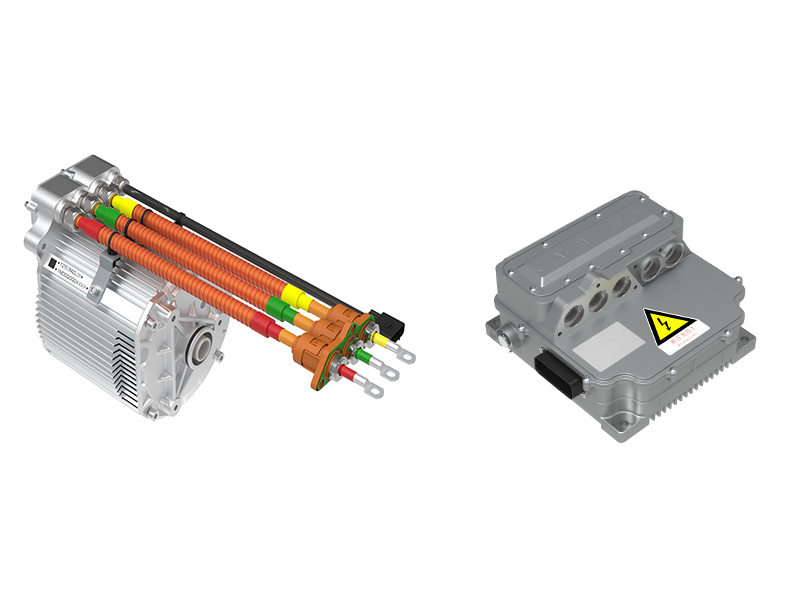
As a supplier of motor controllers, we are frequently asked about the direction of the industry's development. During our collaboration with automotive manufacturers and purchasers, we all agree that the next five years will be a period of significant change. This transformation goes far beyond mere gradual improvement; it represents a fundamental rethinking of the design, integration, and deployment methods of low-pressure systems. Taking into account real engineering challenges and market demands, the following key trends will shape the future direction of development.
The Shift to 48V Architectures
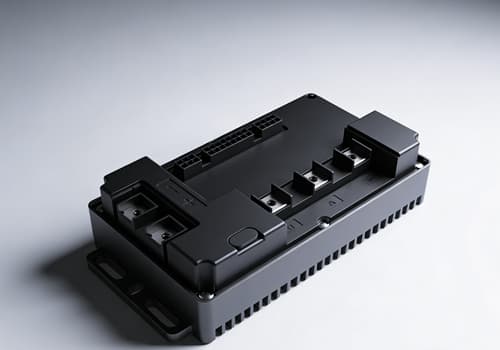
In the next five years, one of the most significant trends in the low-voltage electronic control field will be the overall acceleration of the industry's migration towards the 48V electrical architecture. For two-wheelers and three-wheelers, this transition is driven by what the market really wants: higher power, longer range, and the ability to handle configurations like electric boost and high-torque hub motors.
As the vehicle platform continuously upgrades to higher standards, the 48V motor controller has become the core driving force. It needs to maintain stable and reliable performance under higher power density, more stringent cooling conditions, and more complex EMC requirements, while also adapting to the development trend of vehicle functions continuously integrating into fewer ECU units.
Software-Defined Vehicle Integration
The role of software in vehicles is expanding continuously, and it is reshaping low-voltage motor control applications technology. In the past, motor controllers usually had fixed and inflexible functions that could not be easily changed. However, the new generation of controllers, especially those for two-wheelers and three-wheelers, are now being designed to be able to integrate more deeply into the broader electronic architecture of the vehicle. This means supporting functions such as UDS diagnostics and OTA updates. The benefits of this are obvious: manufacturers can respond more quickly to changing performance requirements without having to redesign physical components.
Scalable Platforms for Cost Efficiency
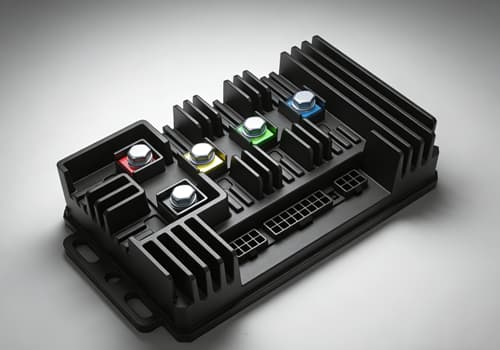
Cost-effectiveness and the resilience of the supply chain have also driven the demand for more integrated and modular low-voltage motor control solutions. Unlike purchasing separate controllers for pumps, fans, and actuators, original equipment manufacturers (OEMs) are increasingly inclined to use scalable platforms that can be configured for various applications. A typical example is our 48V-96V pure electric product platform, specifically designed for two-wheel and three-wheel vehicles with speeds of 60-80 kilometers per hour. This platform supports a working voltage range of 35-120V and has rated voltages covering 48V, 60V, and 72V, enabling manufacturers to apply a single controller architecture to different vehicle models. Features such as MOSFET modules, lightweight magnesium alloy casings, and integrated wheel speed detection further enhance its adaptability. This scalable approach shortens the development cycle and simplifies cross-border procurement. In our daily interactions with the procurement team, the focus has always been on solutions that can integrate hardware with the reliable performance required in different vehicle domains.
Sustainability as a Baseline Requirement
Sustainable utilization is evolving into a necessary capability. Regulatory agencies and consumers are assessing and examining the length of a product's life cycle. This has prompted suppliers to adopt lead-free materials in the future and design products that are easy to recycle. In the coming years, being able to provide transparent and verifiable sustainability indicators will become as important as technical performance.
Adapting to a Platform-Driven Future
For suppliers like us, these trends clearly point to one direction: The success of the solution largely depends on whether you can provide intelligent and adaptable systems that can fit with a wider range of vehicles. In the next five years, those enterprises that can combine profound application knowledge with platform thinking will achieve significant results.

 Product categories