From Hardware to Ecosystem: The Modular Mandate
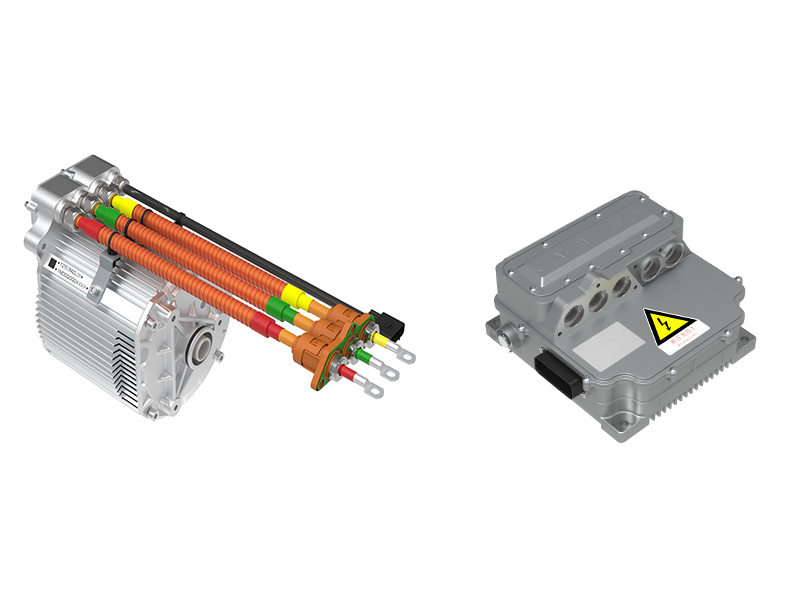
The drone industry has shifted from a hardware-centric model to a software-defined future. For B2B clients, the pressure to innovate has compressed development cycles from years to months. We recognized that our clients—ranging from agritech to defense—weren't looking for another motor spec sheet. They needed a modular electric drive system for professional drones that functioned as a complete ecosystem. By standardizing the mechanical mounts, thermal interfaces, and communication protocols (like CAN bus), we allow manufacturers to treat propulsion as a "plug-and-play" module. This architectural shift lets them focus on their core IP—flight software or sensors—while we handle the complex physics of the electric motor drive system for industrial UAVs.
Accelerating Time-to-Market with Pre-Validated Hardware
The traditional R&D path is a minefield of unknowns. Will the motor overheat? Will the ESC's electromagnetic interference (EMI) scramble the GPS? By offering a pre-validated electric drive system for VTOL drones, we remove these risks. Every module has already endured thousands of hours of stress testing, salt-spray exposure, and vibration analysis. When a client selects our platform, they aren't just buying hardware; they are buying an accelerated timeline. They move from concept to flight testing in weeks, utilizing a reliable UAV electric propulsion solution that has already cleared the toughest engineering hurdles.
Scalability and the "Core Cell" Strategy
One of the most significant advantages of modularity is the ability to support diverse product lines—from light inspection quads to heavy-lift logistics hexacopters—on a single technical foundation. Instead of maintaining separate supply chains, our clients use common "core cells." We focus our engineering on maximizing the power density of these cells, utilizing high-grade neodymium magnets and high-fill factor winding techniques. Because these modules are deployed across high volumes, we can justify the investment in expensive precision manufacturing that would be cost-prohibitive for a single, low-volume custom design. This results in a compact UAV electric motor and controller set that delivers maximum thrust for its weight.
The Integration Edge: ESCs and Thermal Management
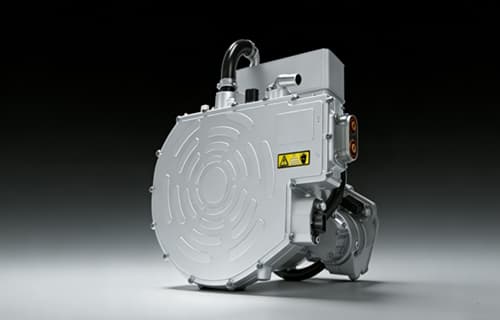
The real magic happens in the integration. By mounting the Electronic Speed Controller (ESC) directly to the motor base, we create an integrated ESC and motor drive system. This eliminates bulky external housing and "cable clutter," which is vital for the aerodynamics of high-speed drones. Furthermore, our intelligent UAV electric drive system uses integrated sensors for real-time telemetry on RPM and temperature. However, heat remains the enemy. We design our high-efficiency UAV drive system cooling solutions with advanced fin geometries to ensure thermal stability during long-endurance industrial missions. This thermal management is critical for preventing mid-air failures and extending the operational lifespan of the UAV electric propulsion unit.
Electromagnetic Compatibility and Supply Chain Stability
High-power electric flight generates significant EMI. Our modular platforms treat EMI shielding as a foundational requirement, using specialized filtering circuits to ensure the electromagnetic compatibility of the UAV drive system meets international standards. This saves our clients months of troubleshooting "ghost" signals. Beyond the technical specs, modularity provides a shield against global supply chain volatility. By focusing on a standardized UAV electric drive system supply chain, we achieve economies of scale on silicon and alloys. This allows us to offer a cost-effective UAV propulsion solution with predictable lead times, which is crucial for clients bidding on large-scale government or industrial contracts.
Future-Proofing and Serviceability
The industry is moving toward Urban Air Mobility (UAM) and eVTOLs. Our modular philosophy supports distributed electric propulsion (DEP), a necessity for redundancy in larger aircraft. We ensure our next-generation UAV electric drive units are compliant with aerospace standards like DO-160G. Simultaneously, we design for the end-user. In a non-modular system, a single failure might ground an entire aircraft. With our modular UAV electric drive system components, field repairs take minutes. This "line-replaceable unit" (LRU) approach is essential for commercial UAV fleet operations, where downtime directly impacts revenue. By taking care of the vibration, heat, and EMI, we empower our B2B partners to focus on changing the world through unmanned flight.

 Product categories