From Discrete Parts to Propulsion: The Integration Imperative
The automotive industry has shifted its perspective on vehicle architecture. We’ve moved past the era of simply delivering a standalone motor. Today, the expectation is for a cohesive electric drive system where the motor, inverter, and transmission function as a single, high-performance unit. This isn't just a marketing shift; it's a technical necessity. To meet the aggressive energy density targets of next-gen electric vehicles (EVs), we must view these components as a unified "propulsion" system rather than separate parts.
Rethinking the Mechanical Layout
Traditional manufacturing treated the motor and gearbox as independent entities, connected by heavy housings and complex couplings. To achieve a high-efficiency powertrain, we need to abandon this model for radical integration.
By merging these components into a unified housing (commonly known as an "e-Axle"), we achieve several key benefits:
Reduced Footprint: We eliminate redundant materials and housings.
Shorter Torque Path: This minimizes mechanical losses and improves responsiveness.
Specialized Production: This shift requires moving away from general-purpose lines toward specialized, high-precision cells capable of handling these complex, multi-functional assemblies.
Maximizing Power Density
Power density is the ultimate metric. It’s about how much power we can generate per kilogram of material and per cubic centimeter of space. To optimize this, we look beyond standard materials.
Advanced techniques, such as hair-pin winding, allow for a higher copper fill factor compared to traditional round wire. When we integrate these high-density motors directly with high-speed reduction gears, the resulting compact drive module offers a power-to-weight ratio that was unthinkable just a few years ago. For OEMs, this translates directly into more cabin space and better vehicle weight distribution.
Taming the Heat
Heat is the biggest enemy of power density. As we shrink the physical size of the drive system, the heat flux becomes incredibly concentrated. The solution lies in integrated thermal management.
We are moving toward direct oil-cooling methods where the lubricant for the gears also serves as the coolant for the motor windings. This dual-purpose fluid system eliminates the need for separate water jackets and bulky radiators. By optimizing cooling, we allow the motor to sustain higher power ratings without risking demagnetization or insulation failure, ensuring reliability even under heavy B2B usage.
Electronics
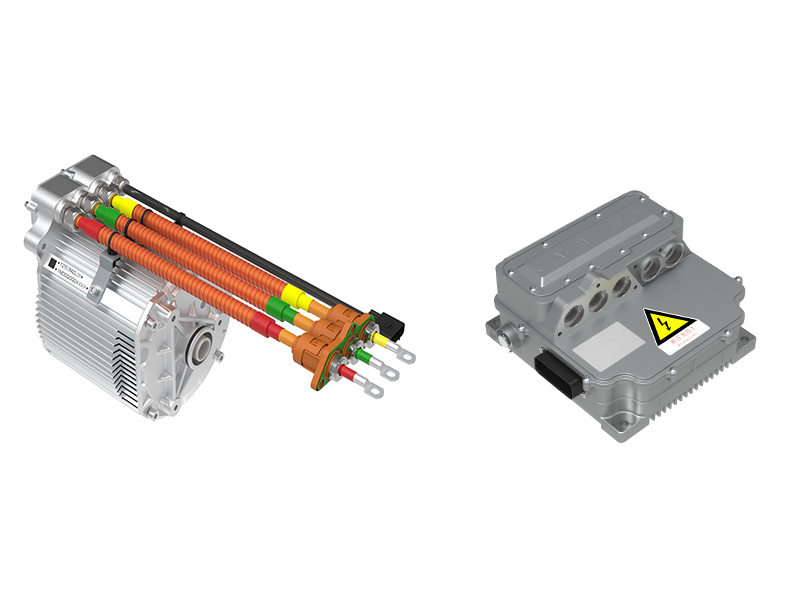
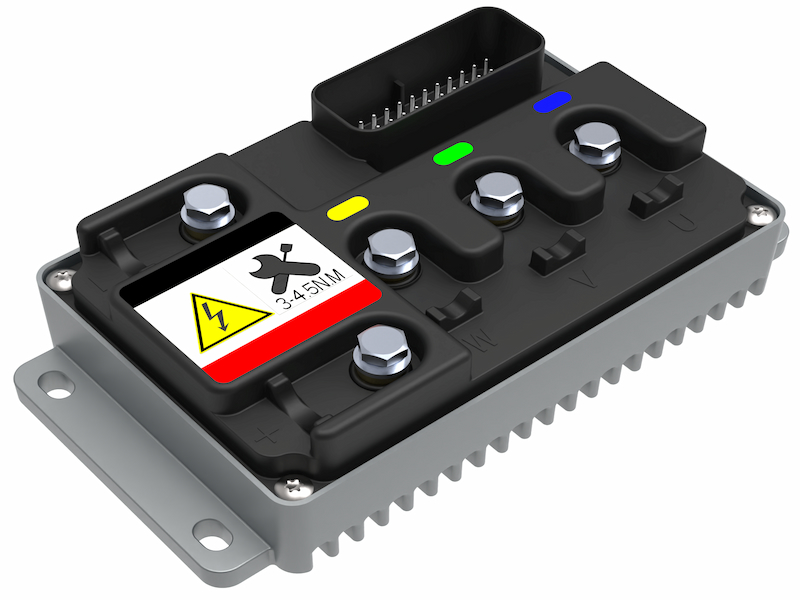
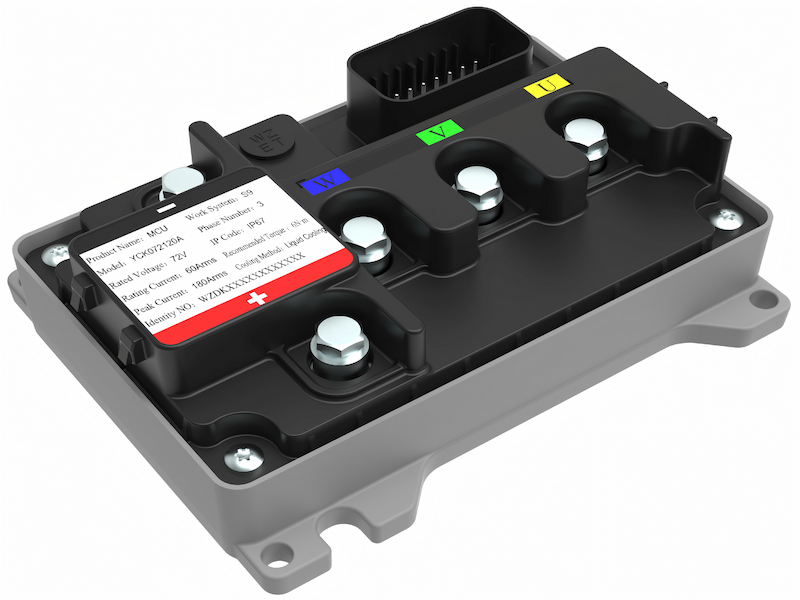
Integration isn't just mechanical; it’s equally vital in the electronic domain. Mounting the inverter directly onto the motor housing—creating a "3-in-1" system—removes the need for long, shielded high-voltage cables.
These cables are heavy, expensive, and a major source of electromagnetic interference (EMI). Integrating the power electronics reduces the system's parasitic inductance. This allows for faster switching speeds and higher efficiency, resulting in a low-noise drive system that is easier to certify and integrate into the vehicle’s high-voltage architecture.
Materials and Lightweighting
To stay competitive, we must master material science. While high-grade electrical steel is standard, we are now using magnesium alloys and high-strength aluminum for housings to shave off every possible gram.
Our manufacturing processes, such as high-pressure die casting and precision CNC machining, are refined to handle these advanced materials while maintaining the tight tolerances required for high-speed rotation. Every milligram saved in the drive assembly contributes to secondary weight savings in suspension and braking components.
Solving NVH Challenges
Bolting a high-speed motor directly to a gearbox and inverter can amplify vibration frequencies through the shared housing. To combat this, we use advanced simulation tools to predict harmonic resonances before production.
By optimizing gear micro-geometries and using skewed rotor designs to cancel out magnetic noise, we aim to produce a drive unit that is as silent as it is powerful. In premium vehicle segments, the acoustic signature is a major brand differentiator.
Scalability and Modular Design
While integration creates high-performance units, it cannot come at the cost of flexibility. We utilize modular platforms that allow us to scale power output without redesigning the entire assembly.
By changing the stack length of the motor or adjusting the gear ratio within the same housing architecture, we can support everything from city cars to SUVs. This modularity allows us to serve multiple clients with varying specs while maintaining the cost benefits of high-volume production.
The 800V Revolution
The industry is rapidly shifting toward 800V architectures for ultra-fast charging. This puts immense pressure on insulation technology. We must implement advanced dielectric materials and corona-resistant wires to prevent partial discharge.
Integrating 800V Silicon Carbide (SiC) inverters directly into the assembly allows for significantly lower switching losses compared to traditional IGBTs. Our production lines are being upgraded with clean-room environments and specialized testing to handle these sensitive high-voltage components.
Quality: The Non-Negotiable Standard
Manufacturing an automotive-grade drive system is about rigorous validation. Every unit undergoes a battery of tests, including end-of-line functional checks, high-voltage isolation tests, and acoustic analysis.
We adhere strictly to IATF 16949 standards to ensure durability—specifically, that the unit can withstand 15 years and 300,000 kilometers of real-world use. For B2B partners, this assurance is non-negotiable, regardless of whether the vehicle operates in freezing winters or scorching summers.
The Business Case for Integration
From a procurement standpoint, integrated drive units make perfect financial sense for OEMs. Instead of managing dozens of suppliers for separate components, they source a single, pre-tested propulsion system.
This reduces internal assembly time and supply chain complexity. By controlling the entire value chain—from winding to final assembly—we lower the Bill of Materials (BOM) cost and pass those savings to our clients.
Future-Proofing with Software
The modern drive system is as much about code as it is about copper. An intelligent drive system must support over-the-air (OTA) updates to refine torque delivery over time.
By working closely with software engineers, we ensure our hardware is perfectly mapped to the control firmware. This mechatronic integration allows for features like regenerative braking optimization and predictive maintenance, turning the relationship from a one-time transaction into a long-term service partnership.
Sustainability and Logistics
we must consider the environmental impact. Integration reduces the total raw material required per kilowatt. We are also designing systems for "second-life" applications and ease of recycling, using recycled aluminum and ensuring rare-earth magnets can be recovered.
Operationally, localized manufacturing mitigates geopolitical risks. Shipping one complete propulsion unit is far more efficient than shipping separate components from different corners of the globe, ensuring reliable delivery even in a volatile market.

 Product categories