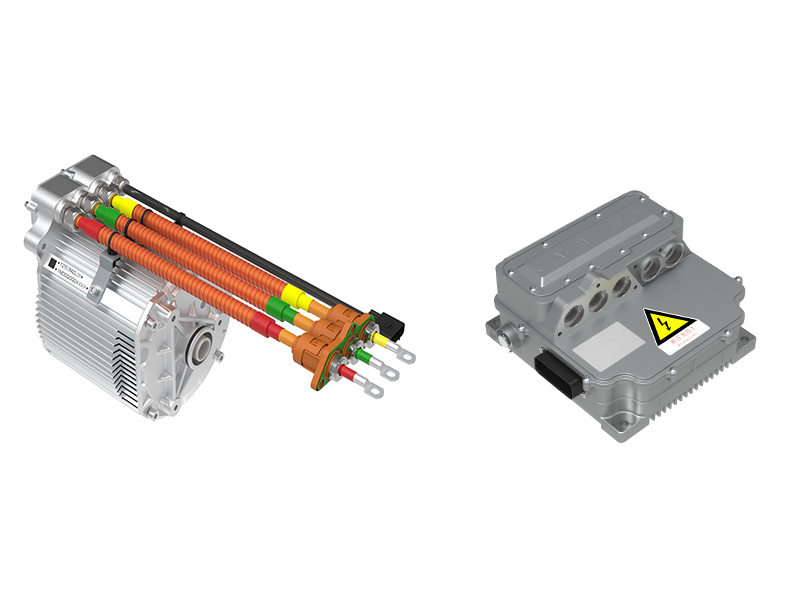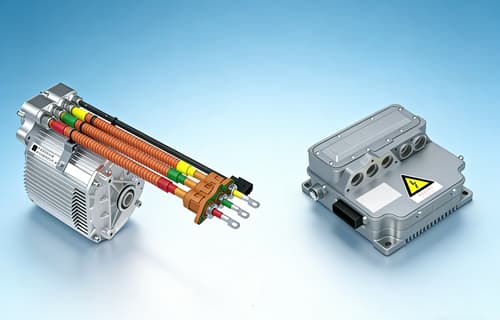
Electric Vehicle not as a collection of parts, but as a symphony of engineering. The transition to electric powertrains reimagines how energy converts into motion. To understand the instant torque of an EV, we must look at the three essential pillars: the Battery Pack, the Power Electronics Controller, and the Electric Motor.
Electric Drive System: The High-Voltage Battery Pack
The battery pack is the vehicle's foundation and most complex assembly. Beyond simple storage, it manages thousands of lithium-ion cells with a focus on energy density and safety. Modern designs integrate the pack into the chassis to lower the center of gravity. The Battery Management System acts as a vigilant guardian, monitoring voltage and temperature in real-time to ensure energy flows safely and efficiently.
Electric Drive System: The Power Electronics Controller
If the battery is the heart, the Controller (or Inverter) is the brain. It converts the battery's Direct Current into the Alternating Current needed by the motor, managing frequency and amplitude to dictate speed and torque. Utilizing advanced Silicon Carbide technology, the controller minimizes energy loss and heat. It also manages Regenerative Braking, converting kinetic energy back into electricity to recharge the battery, maximizing every watt-hour.
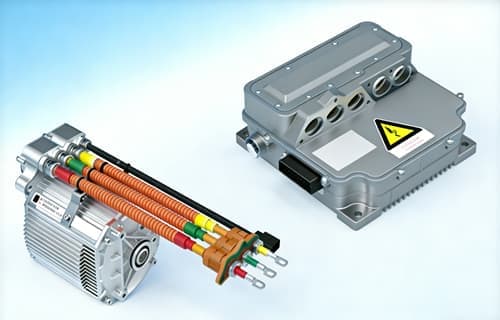
Electric Drive System: The Electric Motor
The Electric Motor provides the physical thrill of driving. Unlike combustion engines, electric motors are elegantly simple, delivering 100% of their torque instantly upon acceleration. We focus on "Power Density"—creating compact, lightweight units that produce maximum horsepower. Integrated with a single-speed reduction gear, the motor eliminates the need for complex gearboxes, reducing friction and maintenance while transforming electromagnetic energy into physical force.
Integration: The Synergy of the "3-in-1" System
The industry is moving toward integrated "3-in-1" drive units, housing the motor, controller, and gear in a single casing. This eliminates heavy cabling, saving weight and space while improving vehicle packaging. Integration also enables thermal harmony; for instance, waste heat from the electronics can be used to warm the battery in cold weather, ensuring peak efficiency across the entire system.
what is electric drive system: Efficiency Above All
Wise constantly pushing boundaries, exploring solid-state batteries for higher energy density and 800V architectures for ultra-fast charging. The ultimate goal is a drive system that is seamless and reliable—redefining human mobility for a cleaner, faster future.


 Product categories