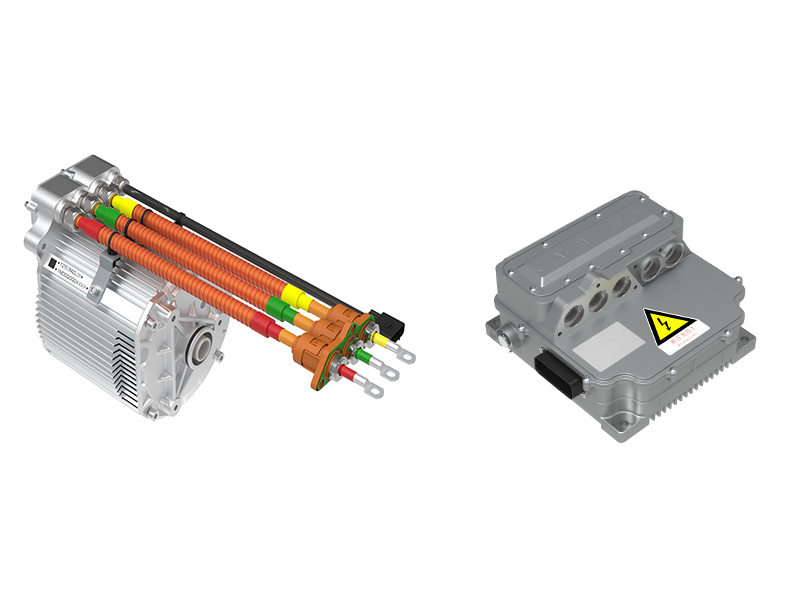
Entering a modern automobile assembly plant, you will notice some details that ordinary drivers usually don't pay attention to. The motors under the hood and inside the doors have changed. Ten years ago, most of them used simple carbon brush designs. But nowadays, more and more motors no longer use carbon brushes, but opt for quieter, more efficient, and more durable designs.
The shift is happening because automotive manufacturers have realized that the old way of doing things comes with hidden costs.
Why Traditional Motors Fall Short
Take the cooling fan in a conventional car. It runs constantly in hot weather, spinning for hours at a time. With a traditional dc motor with speed control , the brushes eventually wear down. The fan still works, but it gets noisier over time, and eventually it fails. On a hot summer day, that means a customer sitting in traffic with no air conditioning. Not exactly the kind of reliability that builds brand loyalty.
Reasons for Choosing Brushless Motors
Now look at the same application with a brushless motor with speed controller. The brushless design ensures that the motor operates without friction, and the temperature is less likely to rise.The controller adjusts the rotational speed in real time according to the coolant temperature, maintaining precise response under different working conditions. This system is designed with a lifespan covering the entire life cycle of the entire vehicle, and no maintenance is required during the process. For manufacturers, this means a significant reduction in after-sales issues and a more stable reputation among end-users.
Efficiency matters too, especially in electric vehicles. Every watt of power that goes into a motor either moves the vehicle or turns into waste heat. Brushless motors waste less. The difference might only be a few percentage points, but multiply that across a dozen motors in a vehicle—cooling fans, water pumps, HVAC blowers—and it adds up to real range on a single charge.
The issue of noise cannot be ignored
Noise is another factor engineers pay close attention to. Customers may not know what a brushless motor sounds like, but they notice when something sounds cheap or worn. A brushed motor on an HVAC blower can develop a faint whine over time. A brushless system runs smooth and quiet, especially at low speeds. In premium vehicles, that refinement is part of the experience. In any vehicle, it is one less thing for service departments to hear complaints about.
In the past, cost was always a reason against brushless systems. These systems had a high initial cost, and the added complexity of the controller led to an increase in material costs. However, now the sales of the products have increased significantly, the manufacturing process is becoming increasingly mature, and the price gap is gradually narrowing. When manufacturers take into account the long-term cost savings factors - such as reducing warranty claims, improving fuel economy, and reducing service costs - then the decision becomes clear and straightforward.
The transformation of the automotive industry has always been gradual. However, in the trend of replacing brushed motors with brushless motors, the direction has become very clear. In the two major directions of requiring long-term operation of the motor and maintaining its reliability, manufacturers are also accelerating their development pace.


 Product categories