As we navigate the mid-point of 2026, the electric vehicle (EV) industry has moved past the "early adopter" phase and into a regime of brutal efficiency and mass-market scaling. From my perspective on the manufacturing floor and inside the R&D labs, the debate between High-Voltage (HV) and Low-Voltage (LV) systems has shifted from theoretical physics to a high-stakes business strategy. We aren't just talking about 400V versus 800V anymore; we are talking about the survival of platforms in a market where charging speeds, thermal management, and silicon carbide (SiC) supply chains dictate who wins. In 2026, choosing a drive system architecture is the most defining decision a manufacturer can make, as it locks in the vehicle’s performance profile and cost structure for the next half-decade.

The 2026 Landscape: Why Voltage is the Ultimate Lever
In 2026, the consumer's "range anxiety" has largely been replaced by "charging anxiety." People no longer care just about how far they can go, but how quickly they can get back on the road. This shift has placed immense pressure on us as manufacturers to rethink voltage. At its simplest, power is the product of voltage and current ($P = V \times I$). To deliver more power—whether for blistering acceleration or ultra-fast charging—you either increase the "pressure" (voltage) or the "flow" (current). Increasing current requires massive, heavy copper cables and creates immense heat due to $I^2R$ losses. Increasing voltage allows us to bypass these physical weight penalties, but it introduces complexities in insulation, safety, and component costs. In 2026, the "sweet spot" is moving, and understanding where your specific vehicle fits on this spectrum is the difference between a flagship success and a legacy failure.
The Ascendance of 800V+ High-Voltage Architectures
For the premium and performance segments in 2026, 800V (and even 900V+ in some luxury platforms) has become the gold standard. As a manufacturer, the primary driver for adopting HV is the "charging curve." An 800V system can theoretically double the charging power of a standard 400V system using the same current-limited charging infrastructure. We are seeing vehicles in 2026 that can add 200 miles of range in under 12 minutes. From a manufacturing standpoint, this architecture allows us to use thinner wiring harnesses, which reduces the vehicle's curb weight by several kilograms. This "virtuous cycle" of weight reduction leads to better handling and slightly improved range, even with the same battery capacity. However, the move to 800V necessitates a total shift to Silicon Carbide (SiC) inverters, which are more efficient at high voltages but come with a significantly higher bill of materials (BOM).
The Low-Voltage Stronghold: 48V and 400V in Mass Production
While high-voltage grabs the headlines, the 2026 mass market still relies heavily on optimized Low-Voltage (LV) and Mid-Voltage architectures. For entry-level commuters and urban delivery vans, the 400V system remains the "workhorse." The supply chain for 400V components is incredibly mature, offering a cost-per-unit that 800V systems simply cannot touch yet. Additionally, we are seeing a massive surge in 48V systems for "micro-mobility" and mild hybrids. From our assembly perspective, 48V is the "safety threshold"—it is low enough to avoid the stringent (and expensive) high-voltage safety protocols and orange-colored heavy insulation required for systems above 60V. If you are building an affordable city car where the top speed is 60 mph and charging happens overnight, the added complexity of a high-voltage system is an unnecessary tax on the consumer.
Silicon Carbide (SiC) vs. IGBT: The Inverter Revolution
The choice between HV and LV is inextricably linked to the power electronics we use to switch that energy. In 2026, the "Inverter War" is in full swing. For our high-voltage 800V platforms, we almost exclusively use SiC MOSFETs. They handle high-frequency switching with minimal energy loss, which is crucial for maximizing battery life. However, for 400V mass-market platforms, the traditional Insulated-Gate Bipolar Transistor (IGBT) has made a surprising comeback through "Generation 7+" iterations that offer better thermal performance than their predecessors. As a manufacturer, I have to balance the 5-8% efficiency gain of SiC against its higher cost and the fragility of the global SiC wafer supply. In 2026, a "mixed-fleet" strategy—using SiC for the primary drive axle and a cheaper IGBT for the secondary, disconnectable axle—has become a very popular way to balance cost and range.
Thermal Management: The Hidden Cost of High Power
One thing we talk about constantly in the factory is "heat." In a low-voltage, high-current system, the heat is generated primarily in the cables and the motor windings. In a high-voltage system, the heat is more concentrated in the power electronics and the battery cells during ultra-fast charging. By 2026, thermal management systems have become incredibly sophisticated, often using "oil-cooled" motor rotors and "cold-plate" battery cooling. When you choose an HV system, you are essentially committing to a more expensive cooling system. You need more sensors, more robust pumps, and more complex software to manage the thermal gradient across the battery pack. If you don't get the thermal management right, the high-voltage advantage disappears the moment the system starts "throttling" to prevent a meltdown.
Integration Trends: The "X-in-1" Manufacturing Approach
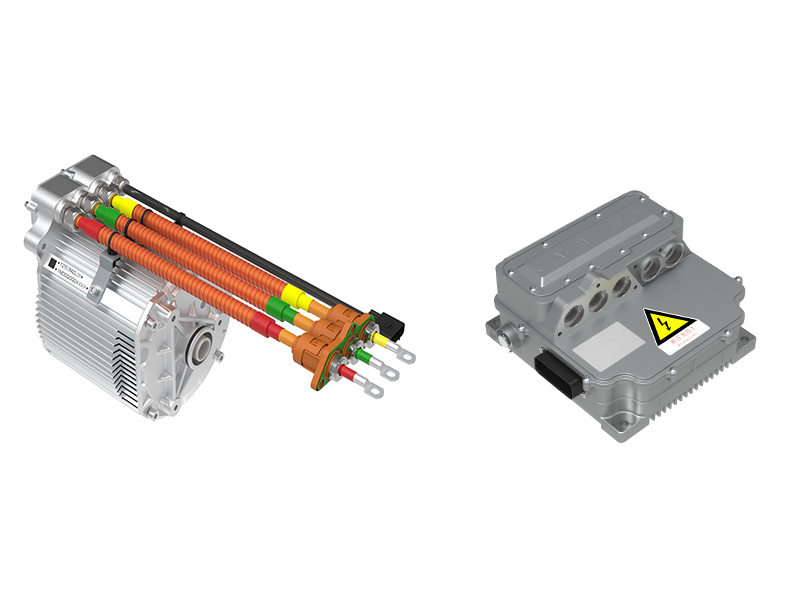
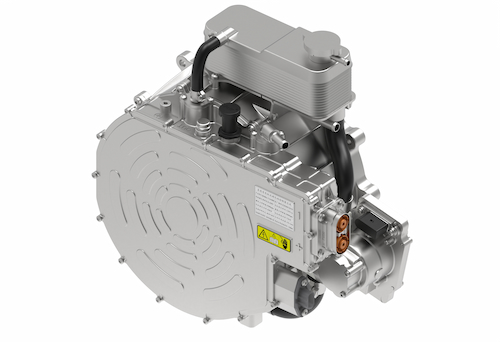
Regardless of whether we are building for 400V or 800V, the trend in 2026 is "hyper-integration." We are no longer looking at motors, inverters, and gearboxes as separate parts to be bolted together. We are moving toward "8-in-1" or even "10-in-1" systems that integrate the motor, inverter, gearbox, onboard charger (OBC), DC/DC converter, and Power Distribution Unit (PDU) into a single housing. For a manufacturer, this integration reduces the number of high-voltage connectors—which are notorious failure points and expensive components. An integrated 800V system is much easier to test on the bench before it ever hits the vehicle chassis. This modularity allows us to swap a "power unit" in a fraction of the time it took four years ago, significantly lowering warranty and service costs over the vehicle's lifecycle.
Safety, Reliability, and the Human Factor
we have to talk about the people who build and fix these cars. High-voltage systems (800V+) require a significantly higher level of training and specialized tooling on the assembly line. The "creepage and clearance" distances—the physical gaps required to prevent electricity from jumping between components—are much larger at 800V. This makes the mechanical packaging a jigsaw puzzle for our engineers. From a reliability standpoint, HV systems are more susceptible to "partial discharge" and insulation breakdown over time. In 2026, we are using AI-driven diagnostic software that monitors the insulation resistance in real-time. Choosing the right system isn't just about the spec sheet; it's about whether your manufacturing ecosystem and your dealer network are ready to handle the "lethal" nature of high-voltage safely and consistently.
In 2026, the "correct" voltage is defined by the vehicle's use case. If you are building a premium SUV or a long-haul truck, High-Voltage (800V+) is no longer optional—it is a requirement to meet consumer expectations for charging and efficiency. However, if you are targeting the sub-$25,000 "people's car" market, the Low-Voltage (400V) architecture remains the king of ROI, providing the best balance of safety, cost, and proven reliability. As manufacturers, our job is to stop chasing "big numbers" and start chasing "system-wide harmony." The drive train is the heart of the EV, and in 2026, a healthy heart is one that is perfectly sized for the body it powers.
Would you like me to help you draft a specific technical comparison table for 400V vs. 800V component costs to assist in your 2027-2028 product planning?

 Product categories