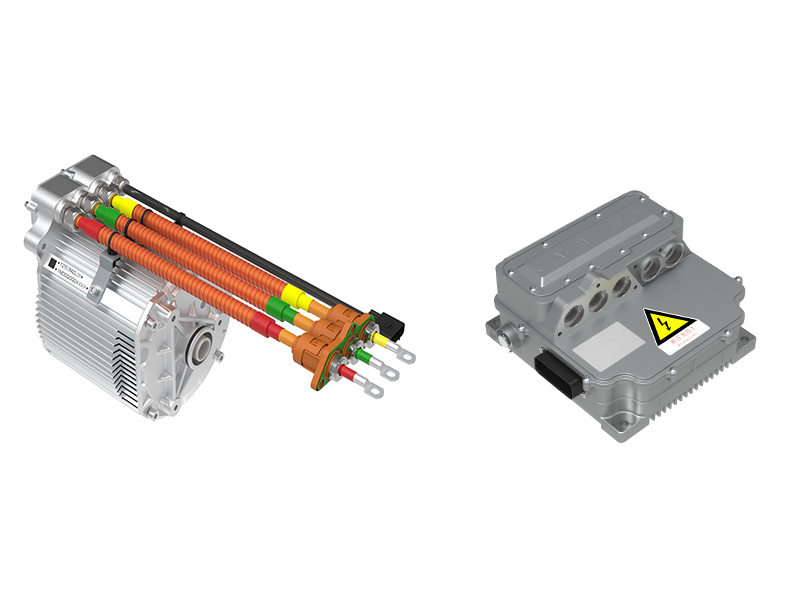
The shift from internal combustion engines to electric propulsion isn't just a fuel swap; it's a complete rethinking of automotive architecture. As a manufacturer who has spent years in R&D trenches, testing prototypes to failure and seeing them power thousands of vehicles on the road, I know the drive train is the "soul" of your EV. Choosing a drive train system is arguably the most critical decision in your product development cycle. It dictates vehicle performance, your brand's reliability reputation, and ultimately, your bottom line. To help you navigate this complex landscape, here are the seven most critical questions to ask before signing a procurement contract.
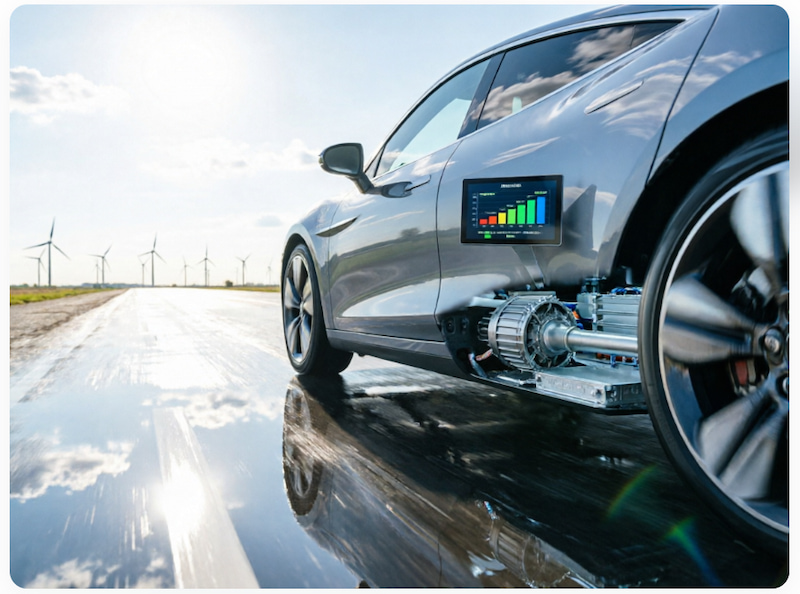
What is the Peak vs. Continuous Power Density, and How is it Managed?
When you look at a spec sheet, the first number that jumps out is usually peak power. It's a sexy number—300 kW sounds impressive and looks great in marketing brochures. However, as manufacturers, we know the "dirty little secret" of electric motors: peak power is often a sprint, not a marathon. You need to ask how long that peak power can be sustained before thermal throttling kicks in. If your vehicle is intended for heavy-duty hauling or high-performance track driving, a high peak power that only lasts for thirty seconds is effectively useless. You must demand data on the continuous power rating and understand the efficiency of the cooling system—whether it's liquid-cooled, oil-cooled, or air-cooled—to ensure the system doesn't turn into an expensive paperweight under sustained load.
Is the System Architecture Truly Integrated (3-in-1 or Higher)?
The days of sourcing a motor, an inverter, and a gearbox from three different vendors and trying to "bolt them together" are rapidly coming to an end. In the modern EV era, space is the most valuable real estate you have. You should be asking if the supplier offers a "3-in-1" system where the motor, inverter, and transmission are housed in a single, compact unit. This integration reduces the need for heavy high-voltage cabling between components, minimizes electromagnetic interference (EMI), and significantly lowers the overall weight. From a manufacturing standpoint, an integrated unit simplifies your assembly line, reduces the number of potential failure points, and usually offers better overall system efficiency because the components were designed to speak the same language from day one.
What is the Efficiency Map Across Different Drive Cycles?
Many buyers make the mistake of looking at the "peak efficiency" percentage—often cited around 96% or 97%. But here is the reality: your vehicle will rarely stay at that sweet spot. Most of its life will be spent in stop-and-go city traffic or cruising at highway speeds. You need to ask for the full efficiency map (the "island plot") of the drive train. How does the system perform at low torque and high RPM? What about high torque at low speeds? A drive train that is 98% efficient at one specific point but drops to 70% during city driving will destroy your vehicle's advertised range. We focus on optimizing the "area under the curve" to ensure that the driver gets the most mileage possible out of every kilowatt-hour stored in the battery.
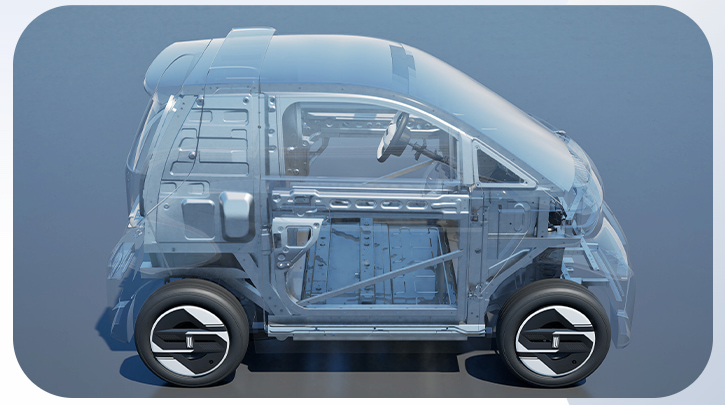
How Robust is the Software and Functional Safety Compliance?
In a modern EV, the hardware is just a vessel; the software is the captain. The inverter's software determines how smoothly the vehicle accelerates, how aggressively it regenerates energy during braking, and how it handles traction control on icy roads. You must ask about the software's maturity and its compliance with international standards like ISO 26262 (Functional Safety). Does the system have ASIL-D rated components? If a sensor fails at 70 mph, does the drive train have a "fail-safe" or "fail-operational" mode? Beyond safety, ask about Over-the-Air (OTA) update capabilities. As a manufacturer, you want the ability to tweak motor control algorithms or fix bugs remotely without requiring a physical recall of thousands of vehicles.
What are the Noise, Vibration, and Harshness (NVH) Characteristics?
One of the biggest challenges we face as EV manufacturers is that without the roar of a gas engine to drown everything out, every little whine, hum, or rattle becomes amplified. An electric motor that produces a high-pitched "whistle" at cruising speeds can lead to a miserable user experience and high warranty return rates. You should ask your supplier for detailed NVH profiles. Does the motor utilize skewed rotor designs or specialized hair-pin winding patterns to reduce electromagnetic noise? How is the gearbox shimmed to prevent gear whine? A quiet drive train is a hallmark of quality, and if the supplier cannot provide clear data on decibel levels and frequency ranges across the RPM spectrum, they haven't spent enough time on the finer details of passenger comfort.
What is the Proven Lifecycle and Reliability Data?
It is easy to make a motor that works for a thousand miles; it is incredibly difficult to make one that lasts for 300,000 miles across extreme temperatures. You need to grill your supplier on their validation testing. Ask for their Accelerated Life Testing (ALT) results. How does the insulation on the motor windings hold up after years of thermal cycling? Is the gearbox designed to handle the instantaneous torque of an electric motor without stripping teeth over time? Furthermore, consider the supply chain of the raw materials. If the motor relies on heavy rare-earth magnets (like Neodymium), ask about the stability of that supply chain and the environmental impact. Reliability isn't just about the part not breaking; it's about the part being consistently available and ethically sourced for the next decade of your production run.
What is the Total Cost of Ownership (TCO) vs. Initial Unit Cost?
I see many procurement teams fall into the trap of choosing the cheapest unit price. This is almost always a mistake in the long run. You must calculate the Total Cost of Ownership. A drive train that is $500 cheaper but 3% less efficient will require you to install a larger, more expensive battery pack to achieve the same range targets—effectively wiping out your savings and then some. Ask about the ease of maintenance. Are the bearings replaceable? Does the inverter have modular components that can be swapped without replacing the entire unit? When you factor in the costs of thermal management, mounting hardware, software integration, and potential warranty claims, the "expensive" high-efficiency system often ends up being the most cost-effective solution for the manufacturer.
Choosing an EV drive train is a partnership, not just a purchase. You are looking for a supplier who understands that their component is the heart of your machine. By asking these seven questions, you move past the marketing fluff and get to the technical core of what makes a vehicle successful.
Would you like me to create a technical comparison table between different types of motor technologies (like IPM vs. Induction) to help with your decision?

 Product categories